Get Your Free In-Home Personalization
Exterior Roller Shades
Control intense sun before it reaches your glass or covered outdoor space. Our exterior roller shades in Eagle, ID provide custom coverage for patios, pergolas, and sun-exposed openings.
Interior window treatments manage sunlight after it reaches the window. Exterior shades approach the problem earlier. Mounted outside, these treatments intercept direct solar exposure before it reaches the glass or passes deeply into a covered patio, pergola, or similar space. That distinction matters when the problem is intense heat. A west-facing patio can be comfortable for much of the day and suddenly become difficult to use when the afternoon sun drops into the opening. Large windows can receive the same concentrated exposure, leaving the area immediately inside noticeably warmer.
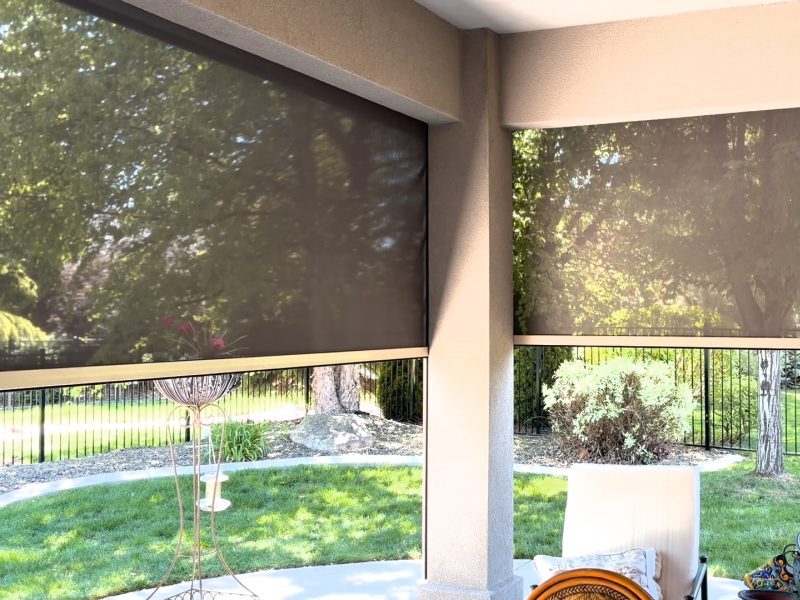
Exterior roller shades create a barrier on the sun-facing side. Saddleback Shutters & Blinds starts by looking at where the sunlight actually enters the space. During your free in-home personalization, we evaluate the opening, sun direction, desired coverage, view, airflow, mounting conditions, and how you use the area. We also consider whether side guidance and motorized operation make sense for the installation. The owner personally measures the opening and evaluates the structural mounting points. Every treatment is custom ordered specifically for the project. Our family completes the installation without subcontracting the work, so the person evaluating the opening stays connected to the finished result.
The location of the shade changes its job. An indoor treatment can reduce glare, provide privacy, filter UV, and help manage the comfort of a room. An exterior shade places the fabric between the sun and the glass or covered area. That means direct sunlight encounters the shade before reaching the interior side of the opening. For heavily exposed glass, this can be particularly useful. Sunlight passing through a window can contribute to heat buildup indoors.
An exterior barrier is designed to reduce the amount of direct solar energy reaching that glass in the first place. The same principle applies to outdoor living areas. A covered patio may already have overhead protection while remaining exposed to low-angle morning or afternoon sun from the sides. A vertical exterior shade can address that opening. The goal is not to enclose the outdoor area like a solid wall. It is to reduce the intensity of direct sun while maintaining the qualities that make the space useful outdoors.
The choice between an interior and exterior treatment should begin with the problem. If the main concern is indoor privacy, room darkening, decoration, or everyday light adjustment, an interior product may be the more appropriate solution. If intense solar exposure is driving heat through a large window or making a covered outdoor area uncomfortable, exterior solar control deserves consideration. Roller shades can use solar fabrics indoors to reduce glare and filter UV while preserving varying degrees of outward visibility.
Exterior roller shades place solar fabric outside the glass. That difference can be important when heat is central to the project. There are also situations where interior and exterior treatments can serve different purposes at the same opening. An exterior treatment may focus on solar exposure. An interior treatment may handle nighttime privacy or room darkening. We look at the complete use of the window rather than assuming one product needs to solve every problem. The right solution depends on whether you are trying to control sunlight, heat, privacy, darkness, or several of those conditions together.
A roof does not block sunlight from every direction. That becomes obvious in the morning or late afternoon. When the sun is lower in the sky, light can travel beneath the roofline and directly into a covered patio. The result may be intense brightness across a seating area or heat that makes the space uncomfortable during hours when you would otherwise want to use it. Patio roller shades provide vertical coverage for those exposed openings.
When lowered, the solar material creates a screen between the sun and the occupied space. When raised, the shade retracts so the opening can feel open again. This ability to change the space throughout the day is one of the reasons retractable outdoor shades can work well for patios. You do not have to permanently close the opening to gain relief during the hours when sun exposure is strongest. We look at the direction of the patio, the size of the opening, the position of structural supports, and where direct sun reaches the seating area. The treatment is then planned around the actual exposure rather than simply filling an opening because one exists.
Pergolas create shade differently from fully covered roofs. Their structure can provide partial overhead relief while still allowing significant sunlight into the space. Depending on orientation, direct sun may enter from above, the sides, or both. Pergola shades can provide another layer of control along appropriate vertical openings. The objective is to preserve the outdoor character of the structure while making it easier to manage periods of intense sun. A retractable design supports that goal.
When solar control is needed, the shade can be lowered. When conditions are comfortable, the treatment can retract into its housing and leave the architectural opening substantially unobstructed. This is where custom sizing becomes particularly important. Pergola openings may not follow the same proportions as conventional windows. Posts, beams, mounting surfaces, nearby walls, and surrounding architectural details all influence the installation. We evaluate those conditions before the treatment is ordered. Exterior shades need to belong to the structure both functionally and visually.
Outdoor solar shades use open-weave materials designed for exterior conditions. The weave matters. A more open fabric can preserve greater outward visibility and airflow while still reducing direct solar intensity. A denser weave changes the balance. It can provide stronger screening but may reduce the openness of the view. Neither choice is automatically correct. Think about how you use the space.
If a patio overlooks a yard or landscape, maintaining that connection may matter significantly. If the opening receives severe late-day sun, stronger solar screening may carry more weight. If airflow is important, the material needs to support the way the outdoor area functions. We compare those priorities during the consultation.
The shade should not solve the heat problem by unnecessarily removing the qualities you enjoy about the space. This is especially important with large exterior openings. A small fabric sample can look quite different once stretched across a broad patio or pergola opening. We consider the full scale of the installation before finalizing the material.
One reason homeowners consider outdoor solar shades is that they want relief without turning an outdoor space into a closed room. An open-weave fabric can provide that middle ground. The material filters direct sun while retaining varying degrees of outward visibility. The exact result depends on the selected weave, fabric color, surrounding light, and viewing conditions.
We do not describe exterior solar fabric as invisible. It is still a treatment covering the opening. But compared with a solid wall or fully opaque barrier, the appropriate solar material can preserve a stronger connection to the exterior. That can be valuable on patios designed around a backyard, landscape, pool area, garden, or other view. During your in-home personalization, we discuss how important that view is relative to heat and glare reduction. The answer helps determine which fabric density deserves consideration.
Exterior shades face conditions that interior treatments do not. Wind is one of them. A wide piece of fabric mounted outside can react to moving air. That means the installation needs to consider more than the top mounting point. Side channel guides are frequently used to help keep exterior shade fabric controlled along the edges. They can reduce unwanted movement and help prevent the material from separating excessively from its intended path during breezy conditions. Whether side guidance is appropriate depends on the selected system and installation.
We evaluate the opening, surrounding structure, dimensions, and expected exposure before determining the configuration. No exterior fabric treatment should be treated as unaffected by weather. Conditions can vary, and the treatment needs to be used according to the selected product’s operating requirements. Our role is to plan the installation around the actual exterior environment instead of applying an indoor mounting mindset outside.
Exterior installations require careful attention to what is supporting the treatment. The shade, housing, brackets, and compatible side guidance need appropriate mounting conditions. We evaluate structural framing points and available mounting surfaces rather than assuming the visible exterior finish alone is sufficient for every installation. This assessment happens before the product is ordered. The owner personally measures the opening and examines where the hardware can be positioned.
We look at width, height, surrounding framing, posts, beams, walls, trim conditions, and other architectural elements that may affect placement. The objective is to create full useful coverage while keeping the system aligned with the opening. Custom sizing is particularly important because exposed edges can allow angled morning or evening sunlight to enter around the treatment. Coverage needs to be planned according to the path of the sun and the physical limits of the structure. Once the measurements and configuration are confirmed, the treatment is special ordered for the project.
Exterior shades do not need to dominate the architecture all day. When raised, compatible retractable outdoor shades roll into a compact housing above the opening. This allows the patio, pergola, or exterior glass area to return to a more open condition when solar control is not needed. That is useful because outdoor spaces change constantly. A shaded morning may require no additional coverage. Strong afternoon sun may make the shade valuable several hours later.
A cooler evening may call for the opening to be clear again. Retractability lets the treatment respond. The housing also affects the finished appearance. Its location needs to work with the surrounding structure rather than looking randomly attached. We consider the mounting position during measurement so the shade can function properly while respecting architectural lines. A large exterior treatment should look intentional when lowered and restrained when raised.
Motorized exterior shades can be particularly useful on large openings. The size and location of outdoor treatments can make manual operation less convenient than it would be on a small interior window. Compatible exterior systems may use rechargeable motors with remote or smartphone controls depending on the selected equipment. Motorization allows the treatment to be raised or lowered without manually handling a large shade. That can make it easier to respond when direct sun moves into the patio or across the glass.
We still treat motorization as a practical decision. The selected product, dimensions, access, frequency of adjustment, and available controls all matter. During installation, compatible motorized systems are tested to confirm that the shade responds properly and travels evenly. We also demonstrate the operating controls so you understand how the treatment should be used. Technology should make a large exterior shade easier to manage. It should not make everyday operation more complicated.
Exterior shade measurement is not only about the dimensions of the opening. The angle of the sun matters too. A treatment can cover the obvious center of an opening while leaving an edge where low-angle sunlight enters during certain hours. Morning and evening exposure can make this particularly noticeable. During the consultation, we discuss when the problem occurs. Is the patio uncomfortable at 4 p.m.?
Does early evening sun reach directly under the roofline?
Does a large west-facing window receive intense exposure for several hours?
The timing helps us understand where coverage matters. We then measure the full opening and evaluate the practical limits of the mounting area. The goal is to avoid treating solar control as a generic rectangle. A custom exterior shade should be planned around both the structure and the sunlight that prompted the project.
Exterior solar control has specific strengths, but not every sunny window needs an exterior treatment. If the primary concern is privacy after dark, an interior treatment may be more useful. If you need a bedroom to become substantially darker, a blackout interior shade is designed around that goal. If insulation at the glass is the main concern, custom cellular shades deserve consideration.
If you want adjustable fabric light control inside a living space, sheer window shades may fit the room better. Exterior roller shades make their strongest case when direct solar exposure and outdoor heat are central problems. They intercept sunlight outside. They can cover large patio or pergola openings. They can retract when not needed. They can use open-weave solar material to balance heat rejection with view and airflow. Those are specific advantages. Saddleback Shutters & Blinds recommends them when those advantages match the project, not simply because an exterior treatment is available.
A patio is more than an opening between two posts. Furniture placement matters. Walking paths matter. Views matter. Doors need clearance. Outdoor kitchens, counters, railings, lighting, and other features can influence where a shade can operate. The same applies around large exterior windows. Nearby architectural elements may affect the mounting position or available coverage. We consider those conditions during the in-home visit.
The objective is to integrate the shade with how you actually use the space. A treatment that blocks a preferred view unnecessarily or interferes with normal movement has not been planned around the whole project. This is another reason custom ordering matters. The product needs to follow the structure and use of the area rather than forcing the area to adapt to a predetermined size.
Exterior shade projects involve several details that are easier to evaluate when you can see the available system information together. Review the supplied Exterior Standard Screen Brochure for additional product information. The brochure is a useful starting point. The in-home assessment determines how the system relates to your actual opening. We look at the structure, dimensions, exposure, fabric requirements, view, airflow, side guidance, and operating preferences before finalizing the configuration.
Our exterior shade process starts outside.
We discuss the time of day when the patio, pergola, or glass becomes uncomfortable and look at the direction of direct exposure.
We inspect the opening, framing, mounting surfaces, posts, beams, surrounding architecture, and other conditions that affect installation.
We consider weave density according to heat reduction, glare, airflow, outward visibility, and the overall appearance of the opening.
Where appropriate for the selected system, we evaluate side channel guidance to help control the fabric along the opening.
We discuss compatible manual or motorized exterior shades according to size, accessibility, and daily use.
The owner personally measures the project and confirms the configuration before the treatment is special ordered.
Our family mounts the exterior hardware, installs the treatment, checks alignment, and tests the complete operating range. Compatible motorized controls are tested before the project is finished. We never subcontract measurements or installation. Exterior projects benefit from having the same family responsible for understanding the structure and completing the final fit.
Exterior solar control needs to account for conditions that do not exist at an indoor window.
The right exterior shade begins with the sun, the structure, and how you want to use the space.
Exterior roller shades intercept direct solar exposure before it reaches the glass or covered area. That makes them particularly useful when heat from intense sunlight is the primary concern.
Yes, appropriate exterior systems can be installed across suitable patio and pergola openings. We evaluate the dimensions, structural mounting points, sun direction, and surrounding features before recommending a configuration.
Depending on the selected open-weave fabric, varying degrees of outward visibility can be maintained. We balance view, airflow, solar filtering, and desired coverage when comparing materials.
Side channel guides are frequently incorporated to help control fabric movement and keep the treatment aligned. Whether they are appropriate depends on the selected system and installation conditions.
Motorized exterior shades are available with compatible systems. Rechargeable motors may support remote or smartphone operation depending on the selected equipment. We test compatible controls during installation.

Show us when and where direct sun makes your outdoor space uncomfortable. We’ll assess the opening and plan exterior coverage around the exposure.