Get Your Free In-Home Personalization
Roller Shades
Control bright windows without adding visual clutter. Our custom roller shades in Eagle, ID pair tailored fabrics with precise sizing for glare, privacy, UV protection, and everyday light control.
Roller shades look simple. Choosing the right one is not always as simple. A window facing strong afternoon sun has different requirements from a bedroom window where darkness matters. A living room may need glare reduction without losing the outdoor view. A street-facing space may need stronger privacy. A home office can require enough daylight to work comfortably without constant reflections across a monitor. The fabric determines much of what happens next.
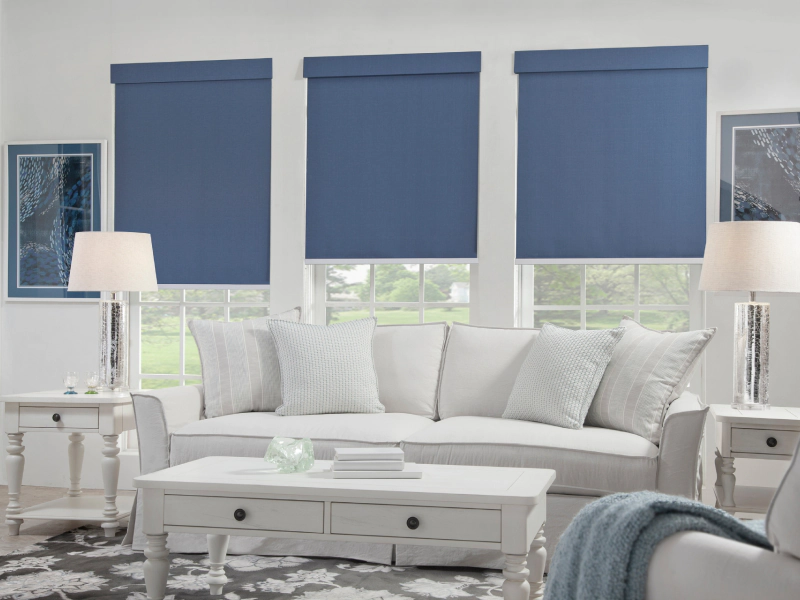
Custom roller shades give us the ability to select the material around the window rather than choosing one opacity for every room. Saddleback Shutters & Blinds begins by looking at the direction of the glass, the intensity of the sunlight, your privacy requirements, the view you want to retain, and how the room is used. During your free in-home personalization, we bring physical fabric samples into the space. You can see how sheer, light filtering, solar, and blackout materials respond to the actual daylight instead of making the decision from a photograph.
The owner personally measures each opening and evaluates whether an inside or outside mount fits the window and your coverage goals. Every shade is custom ordered specifically for the opening. Our family then completes the installation without subcontracting the work.
Glare can make an otherwise bright room difficult to use. It may wash across a television. It can reflect from a computer screen. It can make a seating area uncomfortable at certain times of day. The instinct may be to block the window completely, but darkness is not always the outcome you want. Solar roller shades provide another approach. Solar-focused fabrics are designed to filter incoming sunlight and reduce glare while allowing varying degrees of outward visibility. The result depends on the selected fabric. Openness, color, construction, and the intensity of the light all affect how much you can see through the material and how much sunlight reaches the room. This makes fabric selection important.
If preserving the view matters, we look at solar materials that balance visibility with the level of glare reduction you need. If privacy matters more, a different fabric may be more appropriate. We make those comparisons at the window because glare is specific to the room. The direction of the glass, time of day, nearby reflective surfaces, and how you use the space all change the decision. The goal is not simply to make the room darker. It is to make the daylight easier to live with.
Solar fabrics are not all equally open. The openness of the weave influences the relationship between glare control, outward visibility, incoming light, and privacy. A more open solar material can preserve a stronger visual connection outdoors, but it also allows more light through the fabric. A tighter material provides greater coverage but changes the view. That creates a tradeoff. For a living room overlooking a yard or landscape, maintaining visibility may be high on the priority list. For a home office with intense afternoon glare, stronger filtering may carry more weight.
A window where privacy is the main concern may require a different category of fabric altogether. Color also affects the experience. The same openness level can look and perform differently depending on the selected material and surrounding light. This is why we prefer to hold samples against the actual window. You can look through the fabric. You can see how much light reaches the room. You can compare the view. You can evaluate how the material looks against the trim, flooring, walls, and furniture. A specification becomes much easier to understand when the sun is coming through the sample in front of you.
One of the most important questions about solar roller shades is what happens at night. During the day, the brighter exterior environment can help maintain outward visibility through certain solar fabrics while reducing glare inside. At night, the lighting relationship reverses. When the interior is brighter than the exterior, a solar fabric that provided useful daytime screening may not provide the level of nighttime privacy you expect. This is not a defect.
It is a characteristic that needs to be understood before choosing the material. If nighttime privacy is essential, we discuss that requirement during the consultation. A more opaque light filtering fabric may make more sense. Another treatment or layered configuration may also deserve consideration depending on the window and available product options. This is why we do not describe solar shades as a universal privacy solution. Their strengths are solar filtering, glare management, UV control, and the ability to preserve varying degrees of outward visibility.
Privacy needs to be evaluated separately. For a room that needs both strong daytime solar control and stronger nighttime coverage, we compare the available solutions before ordering. The right fabric is the one that fits the complete day, not only the moment when the sample looks appealing.
Not every bright room needs solar fabric. Sometimes the goal is simply to soften daylight and create more privacy without making the room dark. Light filtering roller shades can work well in those situations. The fabric diffuses incoming light and creates a more continuous surface across the window than adjustable blinds. This can be useful in living rooms, dining spaces, offices, and other areas where you want the window covered while still allowing daylight into the room.
Opacity varies by fabric. Some materials produce a brighter effect. Others create stronger visual separation. Color and texture also influence how the shade feels in the room. Because roller window shades use a relatively simple profile, the fabric itself becomes the main visual element when the treatment is lowered.
We compare that fabric against your interior rather than treating it as a purely functional decision. A warm neutral can relate differently to wood flooring than a cooler shade. A subtle texture may complement a layered interior, while a cleaner material can fit a more restrained space. The treatment can remain visually quiet without being an afterthought.
Some rooms need more aggressive light control. Bedrooms are a common example. Blackout roller shades use opaque fabric designed to block light through the material itself. That makes them worth considering for sleeping spaces, media rooms, or other areas where room darkening is more important than preserving an outward view. But fabric is only part of the result. Even when the material itself is blackout, light can enter around the edges of the shade depending on how the treatment fits the opening.
This is where measurement and mounting decisions matter. An inside-mounted shade sits within the frame and may leave edge conditions determined by the opening and operating clearance. An outside-mounted configuration can sometimes provide greater overlap around the window. The appropriate approach depends on the architecture, available mounting surfaces, and desired appearance. We evaluate these details before ordering. If minimizing light bleed is a major priority, tell us during the consultation. We can plan the fabric and mounting approach together instead of expecting the word blackout to solve every part of the window.
Sunlight affects more than your eyes. Repeated exposure can also affect flooring, furniture, artwork, fabrics, and other interior materials. Roller shades can help manage that exposure by placing a selected fabric between direct sunlight and the room. Solar fabrics are particularly relevant when you want to filter UV while retaining more outward visibility than an opaque shade would allow. The appropriate material depends on the amount of sun and what you want to protect.
A west-facing living area may experience a concentrated period of strong afternoon exposure. A home office may have a narrower glare problem at a specific time. Large windows can create another challenge because the amount of glass increases the area exposed to sunlight. We look at these conditions in person. The goal is not to promise that a shade makes interior materials immune to fading.
It is to reduce unwanted exposure according to the selected fabric and how the treatment is used. That distinction matters. Window treatments work as part of how you manage sunlight in the room. The fabric should be selected with a clear understanding of what you want it to filter.
Roller shades are often chosen because of what they do not add to a room. There are no rows of horizontal slats. There is no permanent shutter frame around the opening. When raised, the fabric rolls into a compact profile. When lowered, it creates a relatively uninterrupted plane across the glass. That simplicity can work well in contemporary interiors, but it is not limited to one design style.
A restrained roller treatment can also sit quietly behind more traditional furnishings, detailed millwork, or stronger architectural elements without competing with them. The fabric and mounting choice influence how subtle the finished shade feels. An inside mount can keep the treatment visually contained within an appropriate frame. An outside mount creates another relationship with the opening and can provide additional coverage where needed. We determine the mounting approach according to both function and appearance. The goal is for the roller shade to look like it belongs at the window rather than like hardware added after the room was designed.
A simple-looking treatment makes alignment especially visible. Roller fabric needs to travel evenly as the shade raises and lowers. The brackets need to be positioned correctly. The tube and hardware need to suit the dimensions and configuration. The fabric needs adequate clearance so it does not rub, buckle, or crease during normal operation.
That begins with measurement. The owner personally measures each opening and evaluates trim depth, mounting surfaces, nearby handles, locks, casing, and other conditions that can affect the installation. We determine whether an inside or outside mount makes more sense. Every shade is then special ordered for the confirmed opening.
Once the treatment arrives, our family installs the brackets and shade, checks alignment, and operates the fabric through its travel. For motorized roller shades, we also test the compatible control system and verify that the treatment responds and rolls correctly. Measurements and installation are never handed to subcontractors. The same family that looks at the window before ordering remains responsible for the finished fit.
Roller shades can support different operating styles depending on the selected product and configuration. Cordless roller shades provide a streamlined manual approach on compatible treatments. The shade can be adjusted without a dangling operating cord, creating a cleaner appearance and straightforward daily use. Motorized roller shades provide another option. Motorization can make particular sense on tall windows, difficult-to-reach openings, groups of shades, or windows that you expect to adjust frequently as sunlight moves throughout the day.
The decision should still be practical. An easily accessible shade that is adjusted occasionally may not need a motor. A high window receiving intense afternoon sun can be a different situation. Depending on the selected manufacturer and operating system, compatible motorized options may include remote or other supported controls. We discuss those options after understanding how you use the room. Technology should make the treatment easier to live with. It should not become the reason for choosing a treatment that otherwise does not fit the window.
Roller and cellular shades can both provide a clean fabric treatment, but they solve different priorities. Cellular & honeycomb shades use internal honeycomb pockets designed to trap air at the window. That makes cellular construction particularly worth considering when insulation and seasonal comfort are central concerns. Custom roller shades use a continuous fabric that rolls around its tube. Their strength is the range of light-control possibilities.
Solar fabrics can reduce glare and filter UV while maintaining varying degrees of outward visibility. Light filtering fabrics soften daylight. Blackout fabrics provide stronger room darkening. If you are primarily concerned about temperature transfer at the glass, cellular shades may deserve the closer look. If glare, UV exposure, visibility, simplicity, or a clean fabric profile is driving the project, roller shades may be the stronger fit. Some homes use both. A bedroom and west-facing office do not need the same treatment simply because they are located under the same roof. We recommend according to the room.
Blinds and roller shades control light differently. Custom blinds installation uses adjustable slats that can be tilted without raising the complete treatment. That can provide flexible directional light and privacy control. Roller shades use fabric. Instead of changing the angle of individual slats, you select the fabric according to the level and type of filtering you want. That distinction affects the experience.
If you frequently want to redirect light while maintaining adjustable sightlines, blinds may fit your routine. If you prefer a continuous fabric surface and want to address glare, UV, opacity, or a streamlined appearance, roller shades may make more sense. Maintenance and visual style also differ. We can compare both during the same in-home personalization so you do not have to make the decision based only on product photographs.
We offer roller shade options from established manufacturers while keeping fabric selection connected to owner-led measuring and family installation.

Explore Norman Soluna Roller Shades to review available roller fabrics, configurations, and operating options.

Explore Alta Roller Shades to compare additional roller shade fabrics, opacity levels, and configurations.
Manufacturer collections provide many possibilities. Our role is to narrow those possibilities according to the actual room. We bring relevant samples into your home, compare them at the window, measure the opening, custom order the selected treatment, and complete the installation. Manufacturer warranties are backed by our local service if a covered operational issue requires attention later.
Our roller shade process begins with what the window is doing to the room.
We discuss glare, direct sunlight, privacy, UV exposure, room darkening, outward visibility, and how the room is used.
We narrow the options to the fabrics that address those priorities, whether solar, light filtering, blackout, or another compatible selection.
We hold physical samples at the actual window so you can compare brightness, view, privacy, color, and texture in your own lighting.
We evaluate inside and outside mounting according to frame depth, desired appearance, coverage, and light-control goals.
Depending on the product, we can discuss cordless or compatible motorized operation.
The owner personally measures the opening, and every roller shade is special ordered for the confirmed dimensions and configuration.
Our family installs the treatment, checks alignment, and operates the shade to make sure the fabric travels evenly. Compatible motorized controls are tested as part of the installation. This process keeps the fabric decision connected to the light problem that started the project.
A clean-looking product still requires careful choices.
Good roller shade planning is less about adding features and more about choosing the correct fabric, fit, and operation.
Not necessarily. Solar fabrics designed to preserve daytime outward visibility can provide less privacy after dark when the interior is brighter than outside. We discuss nighttime privacy separately when selecting fabric.
Solar roller shades are designed around glare, UV filtering, and varying levels of outward visibility. Light filtering roller shades soften daylight and provide a more opaque appearance. The appropriate choice depends on the room.
Blackout roller fabrics can provide strong room darkening because light does not pass through the material. Light around the edges depends on the window and mounting configuration, so we plan coverage carefully when darkness is a priority.
Yes, cordless roller shades are available in compatible products and configurations. We can compare cordless operation with motorized options according to the size, location, and daily use of the window.
Motorized roller shades are available with compatible products and systems. They can be particularly useful for high, difficult-to-reach, grouped, or frequently adjusted windows.

Show us where glare, UV, privacy, or darkness matters. We’ll bring roller fabrics to your windows so you can compare the difference in person.