Get Your Free In-Home Personalization
- Home
- Boise, ID
Boise, ID
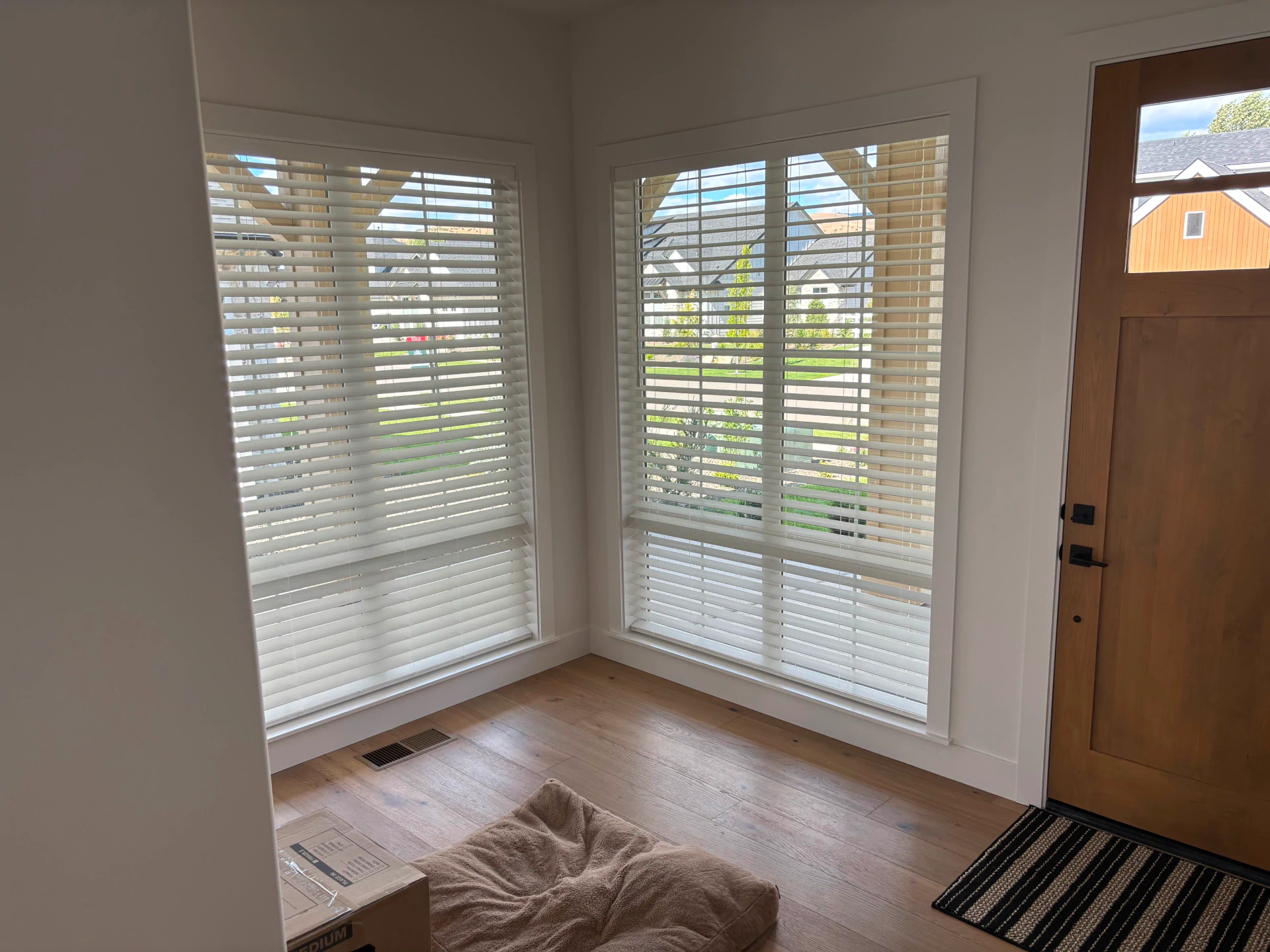
A whole-property approach does not mean putting identical blinds on every window. It means looking at the property as a connected design while allowing individual rooms to solve different problems.
Consider a typical home. A primary bedroom may need greater room darkening and nighttime privacy. The kitchen may call for a surface that is easy to maintain. A living area with large windows might benefit from solar control without losing all of the view. A home office may need glare reduction across computer screens. A bathroom introduces moisture considerations, while a hard-to-reach window can make motorized operation more useful than a manual control.
Commercial spaces have their own priorities. Window coverings may need to manage glare at workstations, preserve visibility through an entryway, cover wide glass, or operate repeatedly throughout the day.
That is why we approach custom window coverings room by room instead of pushing a single product throughout the property.
During your consultation, we ask how each space is used and what you want to change. From there, we can narrow the options to blinds, custom shades, shutters, motorized products, or commercial treatments that address those needs. The result can still feel visually coordinated, but the function is tailored to each room.
Custom blinds remain a practical starting point for many Boise properties because their adjustable slats allow you to change the balance of light, visibility, and privacy throughout the day.
The important word is custom.
An off-the-shelf blind is made to fit a range of common window sizes. A made-to-measure blind is ordered around the dimensions and mounting conditions of a specific opening. That difference matters when you want cleaner proportions, smoother operation, and a finished appearance that relates properly to the window.
We measure more than basic width and height. Depending on the opening and mounting style, trim depth, available clearance, mounting surfaces, hardware, and nearby obstructions can affect the final configuration. The owner personally handles these measurements before the order is placed.
Material selection matters as well. Real wood blinds can bring natural warmth to living spaces, dining rooms, and offices. Faux wood can be a practical alternative for rooms where moisture resistance and easy upkeep matter. Vertical blinds can work well across sliding doors and wide expanses of glass where horizontal products may not provide the desired operation.
For hard-to-reach openings or customers who prefer more convenient controls, motorized options may also be worth considering.
The goal is not simply to install blinds. It is to determine whether blinds are the right answer for the window in the first place.
Rather than listing every product Saddleback offers, it is more useful to focus on the treatment categories that can solve different needs across a Boise home or business.
These options can be combined across a property without making every room look unrelated. Coordinating colors, materials, and design details can establish continuity while allowing each window treatment to perform the job its room requires.
Glare is a good example of why product selection should begin with the problem rather than the appearance of a treatment.
A home office can receive enough direct sunlight to make a computer screen uncomfortable to use. A commercial front desk or workstation can experience the same problem. Closing an opaque shade may solve the glare, but it can also remove natural light and outward visibility that the customer wanted to preserve.
Solar roller shades offer another approach.
Solar fabrics are designed with different openness levels, allowing them to filter sunlight and reduce glare while preserving varying degrees of outward visibility. The appropriate fabric depends on factors such as window orientation, the amount of direct sunlight, desired privacy, and how much of the view you want to maintain.
In a commercial setting, this can be especially useful when a workspace needs glare control while an entry or customer-facing area still benefits from visibility. In a residential office, it can make the space more comfortable during working hours without making the room feel unnecessarily closed.
Other rooms may need a different solution. A bedroom may call for a more opaque roller or cellular shade. A living room may benefit from adjustable shutters. A kitchen may be better suited to blinds with easy-to-clean surfaces.
That is the advantage of planning the property by function rather than selecting one treatment first and trying to make it work everywhere.
Motorization can be useful, but it should solve a real problem.
A tall window that is difficult to reach is an obvious example. Wide expanses of glass with several treatments can also become cumbersome to adjust manually. In other spaces, homeowners may simply prefer the convenience of controlling shades without walking to every window individually.
Depending on the selected treatment and compatible system, controls may include remotes, wall switches, smartphone applications, or smart-home integration.
Before recommending a motorized option, we consider the size and position of the opening, the treatment being installed, how frequently it will be adjusted, and how you expect to use the room. A motorized shade in a high living-room window may provide meaningful everyday convenience. The same feature on a small, easily accessible window may not be as important.
Commercial properties can benefit from the same practical thinking. Large windows, repeated operation, or treatments positioned behind furniture and work areas may make automation easier for employees to use consistently.
Motorization should support the way the room works. It does not need to be added simply because it is available.
During the in-home personalization, we can discuss manual, cordless, and motorized controls alongside the product itself so the operating method is part of the original plan.
Window treatments interact with everything already in the room. Wood tones relate to flooring and cabinetry. Painted finishes sit next to trim. Shade fabrics respond to wall colors, furnishings, and natural light. A material viewed online or under showroom lighting can look noticeably different once it is brought into the space.
We solve that problem by bringing physical samples to you.
Our free in-home personalization lets you compare materials where they will actually be installed. Instead of trying to remember the exact color of your trim while standing somewhere else, you can hold a sample next to it. You can see how a solar fabric changes the view through the window, compare the warmth of wood finishes, or look at shade opacity under the room’s existing daylight.
This process is particularly helpful when planning multiple rooms. We can look for visual relationships between treatments without forcing every space to use the same product.
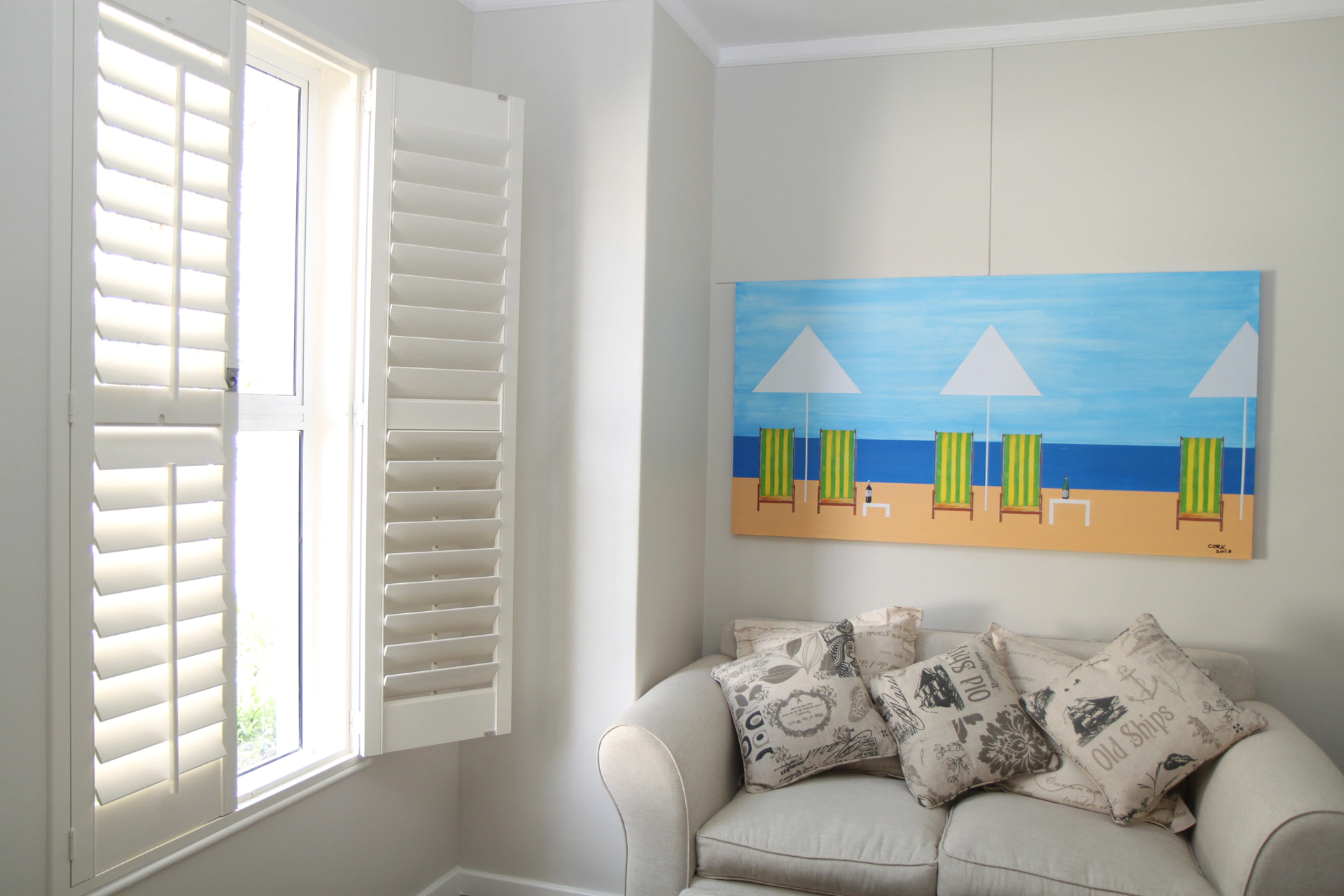
For example, a homeowner might select wood blinds for a front office, plantation shutters for a main living space, cellular custom shades for bedrooms, and moisture-resistant faux wood for a bathroom. The products perform different jobs, but thoughtful color and finish choices can keep the home connected visually.
That is personalization in a practical sense. It is not simply choosing a favorite sample. It is seeing how the option works with the room before committing to a custom order.
Custom window treatments only work as intended when the information used to manufacture them is accurate.
A measurement error can create visible gaps, mounting problems, clearance issues, or an installation that simply does not sit correctly within the opening. Wide windows, unusual trim, shallow mounting areas, specialty shapes, and treatments with larger hardware can require additional planning.
For that reason, Saddleback Shutters & Blinds never subcontracts measurements.
The owner personally evaluates the openings and records the dimensions needed for ordering. We also consider mounting surfaces, trim, clearance, and other conditions that can influence the finished installation. For plantation shutters, the planning can extend to frame style, louver size, and opening layout. For blinds and shades, depth and hardware requirements may determine whether an inside or outside mount makes more sense.
Once those decisions are confirmed, every treatment is custom ordered specifically for the windows.
We also handle the installation ourselves rather than handing the final stage to an outside crew. The treatment is positioned, aligned, tested, and adjusted according to its operating system.
This connection between consultation, measuring, ordering, and installation is an important part of our process. The person responsible for understanding the opening remains involved instead of disappearing after the initial sale.
For customers comparing a window blinds company or window treatment installation provider, that continuity is worth considering alongside fabric, material, and price.
If you are covering several windows, you do not have to make every decision at once. A useful starting point is to rank the rooms according to the problem you most want to solve.
Start With Privacy: Bedrooms, bathrooms, and street-facing rooms may move to the top of the list when nighttime visibility is the primary concern. Consider opacity and adjustability before focusing on color.
Look At Direct Sunlight: Notice where strong sunlight falls during the hours you actually use a room. Solar shades, shutters, blinds, and cellular shades handle that exposure differently.
Consider The Glass Size: A product that feels effortless on a smaller window may be cumbersome across a wide span. Large or difficult-to-reach openings are good places to discuss operating systems and motorization.
Think About Maintenance: Kitchens, bathrooms, busy commercial spaces, and homes with active households may place different demands on materials. Consider how easily the selected treatment can be maintained.
Coordinate Instead Of Duplicating: A visually connected property does not require identical window coverings. Similar tones, materials, or design details can create consistency while the products change according to room function.
This method keeps a whole-property project manageable. It also helps prevent an attractive product from being installed in a room where it does not solve the original problem.
Products matter, but so does what happens between selecting a sample and seeing the finished treatment on the window.
Saddleback Shutters & Blinds has been family-owned and operated since 2001. Over 25 years of experience has taught us that small decisions made early in a project often have the biggest effect on the final result.
That is why our process remains direct.
We come to your property with samples. We discuss how you use the room. We compare privacy, sunlight, insulation, maintenance, style, and budget. The owner measures the openings. Your products are custom ordered. We return for installation without subcontracting the work. Manufacturer warranties are backed by local service if support is needed later.
We also do not believe the highest-priced option automatically makes the most sense. If a simpler treatment fits the window, solves the problem, and works with your budget, that should be part of the conversation.
For commercial customers, the same approach means looking at the practical operation of the property. Glare across workstation screens, visibility at an entry, wide glass, and frequent daily use may matter more than residential concerns.
The recommendation should follow the space, not the other way around.
Not necessarily. Using related colors and finishes can create visual continuity while different rooms use blinds, shutters, roller shades, cellular shades, or other treatments according to privacy, sunlight, maintenance, and operating needs.
It depends on how you want to control it. Blinds use adjustable slats, while shade performance depends heavily on the selected fabric and opacity. Solar shades can reduce glare while retaining some outward visibility, while more opaque materials provide greater coverage.
Motorization can be particularly useful for tall or hard-to-reach windows, wide expanses of glass, multiple treatments operated together, or rooms where shades are adjusted frequently. We can compare operating options during your consultation.
Yes. We serve homeowners and businesses, and the decision process changes according to the property. Commercial projects may place greater emphasis on glare, outward visibility, large windows, repeated operation, and workplace use.
Saddleback does not subcontract measurements or installations. The owner personally handles measurements and opening layouts, and our family remains involved through installation.
Mon – Fri: 8:00 AM – 7:00 PM
Sat – Sun: Closed
Tell us what you want to change at your Boise, ID property. We’ll bring samples and help you compare window treatments for each room, workspace, and priority.