Get Your Free In-Home Personalization
Wood Blinds
Real wood brings grain, warmth, and depth to a window that printed finishes cannot fully duplicate. Our custom wood blinds in Eagle, ID are measured for your openings and selected alongside the materials already in your home.
When a room already includes real wood, the window treatment becomes part of a larger material decision. Cherry cabinetry has its own warmth. Walnut flooring can carry darker undertones. Painted millwork creates a different relationship with the window than stained trim. Furniture, doors, beams, and built-ins can introduce additional wood tones that need to work together rather than compete. Custom wood blinds give us the opportunity to consider those relationships.

Saddleback Shutters & Blinds brings physical samples into your home during a free in-home personalization so you can compare stains, paints, slat options, and finishes in the room where the blinds will actually be installed. That matters with natural wood. Real wood blinds have grain and tonal variation. They do not need to look mechanically identical from one slat to the next. Those differences are part of the material’s character and one of the reasons homeowners choose natural wood blinds instead of a manufactured imitation.
We look at the complete space before recommending a finish. The goal may be to coordinate closely with existing millwork. In another room, a painted wood blind may relate better to the trim. Sometimes introducing contrast gives the window more definition than attempting an overly exact match. We help you see those options in your own lighting before anything is ordered.
Wood blinds are visually versatile, but that does not mean they belong at every window. We consider the conditions of the room along with the appearance you want. Living rooms, dining rooms, home offices, libraries, bedrooms, and other interior spaces can be natural candidates for real wood blinds when the material complements the surrounding design. Rooms with cabinetry, hardwood flooring, stained trim, substantial furniture, or other natural materials can particularly benefit from the depth of real wood. Moisture changes the decision.
If the window is in a room where humidity or moisture exposure is a larger concern, custom faux wood blinds may make more sense. Faux wood can provide a similar slatted appearance with characteristics better suited to certain demanding environments. That is a practical distinction, not a hierarchy. We do not recommend real wood simply because it carries a more premium perception. Our approach is to look at sunlight, privacy, maintenance, room conditions, style, and budget before deciding which material fits. If real wood serves the room well, we can move into grain, finish, slat proportions, and operating choices. If another material makes more sense, we will explain why.
Real wood does not behave visually like a flat color chip. Grain direction, natural variation, stain absorption, and surrounding light all influence the final appearance. That is why choosing wood window blinds from a photograph can be difficult. A stain that looks dark and understated online may reveal warmer tones when placed beside your flooring. A finish that appears neutral under artificial light can feel different when direct afternoon sun reaches the window. We bring samples to you so these decisions can happen in context.
Hold the material near your cabinetry. Compare it with the window casing. Step back and see how the tone relates to furniture and flooring from across the room. Look at it in daylight and then under the room’s interior lighting. We are not necessarily trying to create an exact color match. In many interiors, materials look more natural when they coordinate without pretending to be identical. Grain, species, finish, and age can cause existing wood elements to vary throughout the home. The goal is visual harmony.
For rooms with painted millwork, custom paint finishes can create another direction. A painted wood blind can retain the characteristics and lighter weight of real wood while coordinating more closely with surrounding trim. These choices are easier when the actual room is part of the consultation.
Wood blinds provide more than natural material. Their horizontal slats allow you to change the direction and amount of daylight throughout the day. Tilt the slats to soften direct sun. Adjust them when you want more privacy. Open the angle when you want additional daylight and a clearer outward view. Raise the blind when you want broader access to the glass. That flexibility can work particularly well in rooms where the relationship between privacy and daylight changes over the course of the day.
A home office may need glare redirected away from a screen in the afternoon. A living room facing a neighboring property may need privacy while still benefiting from natural light. A dining space may call for a softer balance as the sun moves. The finish also affects the visual result. Light painted hardwood blinds can blend more quietly with surrounding trim. Richer stains can make the window treatment a stronger design element. If your main concern is fabric opacity rather than adjustable slats, window shade installation may offer a more appropriate range of blackout, light filtering, solar, or insulating choices. We compare those differences before recommending a product.
Real wood can offer a practical advantage that is easy to overlook: its weight relative to some manufactured alternatives. This becomes relevant on larger openings. As a horizontal blind becomes wider, the weight of the treatment can affect daily operation and place additional demand on its components. Real wood’s lighter weight can make it an appealing material for certain larger expanses where the look of horizontal blinds fits the room. That does not mean every large window should automatically receive hardwood blinds. Width, height, mounting conditions, operating preferences, and the overall proportions of the opening still need to be evaluated.
In some cases, another treatment may handle the window more naturally. For particularly broad openings or doors, custom vertical blinds may deserve consideration. A roller treatment may also provide a different approach when uninterrupted fabric and solar control are more important than adjustable horizontal slats. The correct choice begins with the opening. During your in-home personalization, the owner measures each window and evaluates trim depth, mounting surfaces, clearance, and the intended configuration. We use those measurements to determine what can be ordered and installed without placing unnecessary stress on the operating system.
Real wood deserves a fit that looks intentional. Standard-size blinds require the window to work around dimensions determined before anyone saw the opening. Custom wood blinds reverse that process. We measure the opening first. The owner personally records the relevant dimensions and evaluates the frame, trim, depth, hardware, and mounting surfaces. We also determine whether an inside or outside mount makes more sense. An inside mount can create a contained appearance when the frame provides sufficient usable depth. An outside mount may be appropriate where depth is limited or where greater coverage around the opening is desired.
The decision is made according to the actual window rather than a default rule. Once the measurements and product details are confirmed, every blind is custom ordered specifically for the window. This is especially important when several blinds will appear in the same room. Openings that look identical are not automatically assumed to measure exactly the same. Individual measurements help maintain a consistent finished appearance without relying on assumptions about the construction. Our family also completes the installation. We never subcontract measurements or fitting, so responsibility for the dimensions stays connected to the final result.
Real wood and faux wood blinds can look similar from across a room, but the decision should go deeper than appearance.
Real Wood Blinds
Real wood provides authentic grain and natural variation. It can be stained or painted to coordinate with the room and is lighter than many alternative slat materials. That lighter weight can be useful on certain larger windows. Natural wood can also be refinished when appropriate, giving homeowners another possibility if interior preferences change over time.
Faux Wood Blinds
Custom faux wood blinds are manufactured rather than cut from natural wood. They can make more sense in rooms where moisture resistance and straightforward maintenance are higher priorities. They can also provide a wood-inspired appearance when real wood is not the practical choice for the environment. The question is not which product wins. The question is which characteristics matter at that particular window.
If you are furnishing a formal living area with hardwood floors and substantial wood furniture, real wood may contribute something visually that faux wood does not need to imitate. If you are covering a window in a more moisture-prone environment, the balance can shift. We explain those tradeoffs with samples in front of you rather than treating material selection as an upgrade ladder.
One of the common concerns with real wood blinds is whether the stain needs to match existing wood perfectly. Usually, that is not the most useful goal. Homes often contain multiple wood tones. Flooring can differ from cabinetry. Furniture may introduce another species or finish. Trim may have aged differently from newer built-ins. Even pieces made from the same species can show natural variation. Trying to force an exact match can sometimes make the differences more noticeable.
Instead, we look for coordination. Undertones can matter more than exact darkness. A warm stain may sit naturally beside another warm wood even when one is lighter. A painted finish may create a cleaner transition when the room already contains several strong wood tones. Contrast can also be intentional. Dark wood window blinds against lighter walls can frame the opening. Lighter natural wood blinds can keep a room with darker flooring from becoming visually heavy.
There is no single formula because the room determines the answer. Physical samples allow us to test these relationships before the blinds are manufactured. This is one of the advantages of in-home personalization over making the decision in a showroom separated from the materials you are trying to coordinate.
Operation should be selected around daily use rather than novelty. Motorized wood blinds may be worth discussing for compatible products and window configurations where accessibility or frequent adjustment makes powered operation useful. A difficult-to-reach window is an obvious example. A group of treatments that you expect to reposition regularly may be another. But motorization is not necessary simply because it is available.
If a blind is easily accessible and manual operation suits your routine, adding powered control may not improve the room enough to justify it. We discuss the operating options during the consultation and consider them alongside the size and weight of the treatment. For windows where automated fabric control is a stronger fit, custom roller shades may provide another direction. The important point is to select operation at the same time we are evaluating the product, window, and daily routine. A designer blind should not only coordinate with the room. It should be convenient to live with.
Real wood blinds do not require complicated maintenance, but they should be cared for as a natural material. Routine dusting helps keep the slats clean and prevents buildup. When additional cleaning is needed, the selected finish and manufacturer care instructions should guide the method. Excessive moisture is not something we treat casually with natural wood. This is another reason room conditions matter during selection. A product that needs to tolerate frequent moisture exposure may point us toward faux wood instead.
With appropriate care, real wood blinds can maintain their appearance for years. Their finish may also offer options for refinishing depending on the product and future design goals. Natural variation should be expected. Grain patterns and subtle tonal differences are characteristics of real wood, not defects that need to be hidden. Homeowners who enjoy those variations often choose wood specifically because the material does not look perfectly manufactured. If a completely uniform appearance is your priority, we can discuss whether another material would suit that expectation better.
We work with established manufacturers so you can compare custom wood blind options with the support of our local measuring and installation process.

Explore Norman Ultimate Normandy Wood Blinds for available product information, materials, finishes, and configurations.

Explore Alta Wood Blinds to review another range of wood blind styles and options.
Manufacturer choices are only one part of the process. We help you compare the relevant options in your home, measure the windows, place the custom order, and complete the installation. Manufacturer warranties are backed by our local service, so the relationship does not end when the product is mounted.
Our process keeps the material decision connected to the finished fit.
We start with the windows, existing materials, sunlight, privacy needs, maintenance preferences, and the way you want the blinds to function.
We bring wood finishes into your home so you can see grain, stain, and paint choices beside the materials they need to complement.
If moisture, maintenance, window size, or another factor makes faux wood or a different treatment more suitable, we discuss that before ordering.
The owner personally measures the windows and evaluates trim depth, clearance, mounting surfaces, and operating conditions.
We finalize the material, finish, mounting approach, and appropriate operating options.
Every treatment is ordered specifically for the confirmed opening.
Our family completes the installation, checks alignment, and tests operation before considering the project finished. This direct process is part of how Saddleback Shutters & Blinds has approached window coverings since 2001. We are family-owned and operated, and measurements and installations are never handed to subcontractors.
Real wood is a distinctive material, so a few decisions deserve extra attention.
These decisions help the finished treatment feel like part of the room rather than an accessory selected separately from it.
Yes. Real wood blinds use natural wood materials with visible grain and tonal variation. Available species, stains, paints, and other specifications depend on the selected manufacturer and product.
Neither is automatically better. Real wood provides natural grain, lower weight, and finish characteristics that can work beautifully in many interiors. Faux wood may be a stronger fit where moisture resistance or easier maintenance carries more weight.
We can compare available stains and paints with your cabinetry, flooring, trim, and furniture during the in-home personalization. The goal is usually thoughtful coordination rather than assuming two different wood products can be made visually identical.
Real wood’s lighter weight can make it advantageous for certain larger openings, but the dimensions and operating requirements still need to be evaluated. We measure the window before recommending the configuration.
Motorized wood blinds may be available depending on the selected manufacturer, product, dimensions, and operating system. We can discuss whether motorization provides a practical benefit for your windows during the consultation.
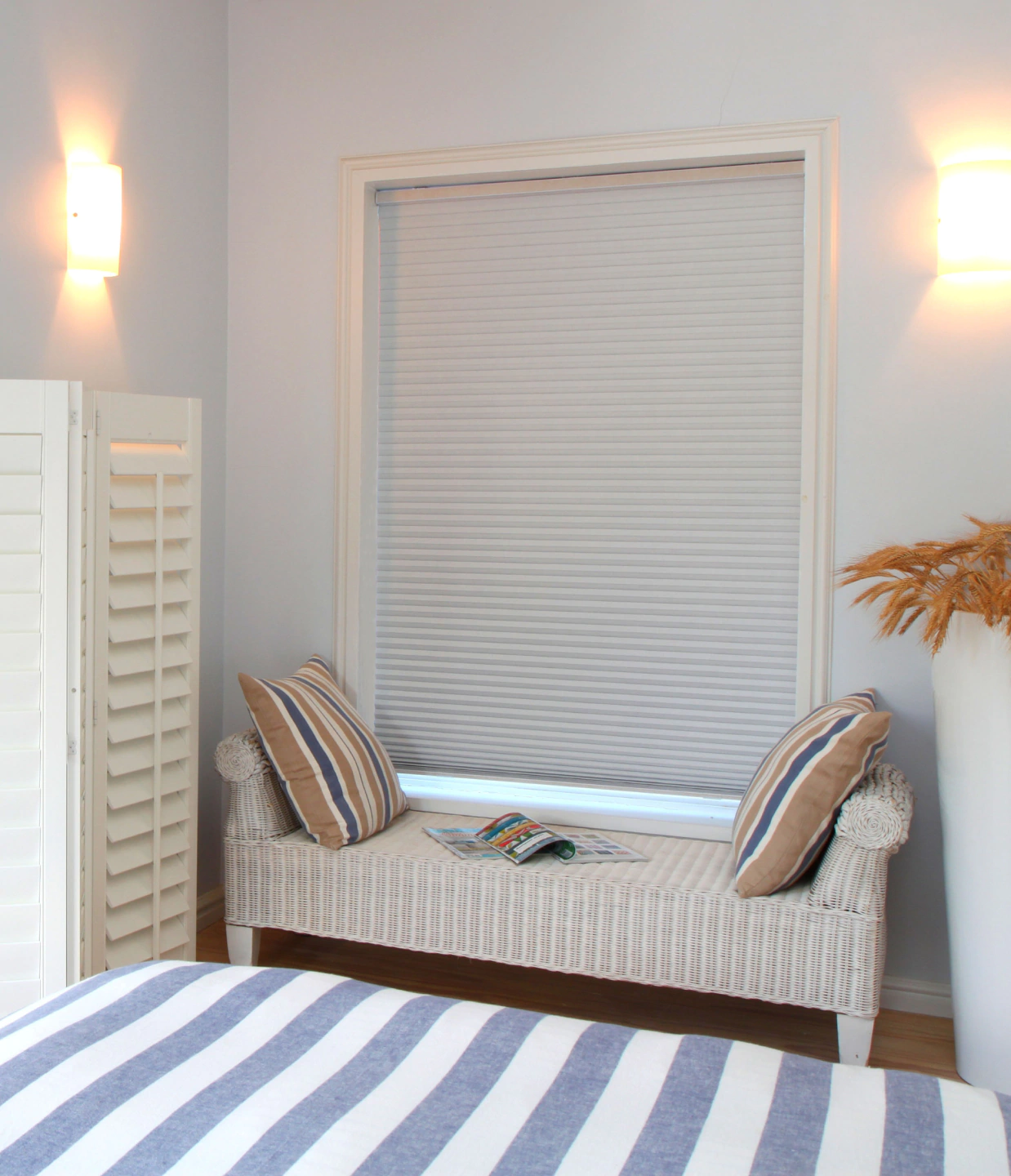
Compare real wood samples with your trim, flooring, and cabinetry at home. We’ll help you find the material and finish that belong in the room.