Get Your Free In-Home Personalization
Commercial Window Treatments
Reduce harsh sunlight without unnecessarily closing off your business. Our commercial window treatments in Eagle, ID are planned around glare, visibility, privacy, and daily use.
Commercial glass has a job beyond bringing daylight into a building. A storefront needs visibility. A front desk may need a clear view of approaching customers. An office needs enough daylight to remain comfortable without putting harsh glare across computer screens. A conference room may need greater privacy at certain times. Large west-facing windows can introduce substantial afternoon sun and heat. One treatment does not automatically solve all of those problems.
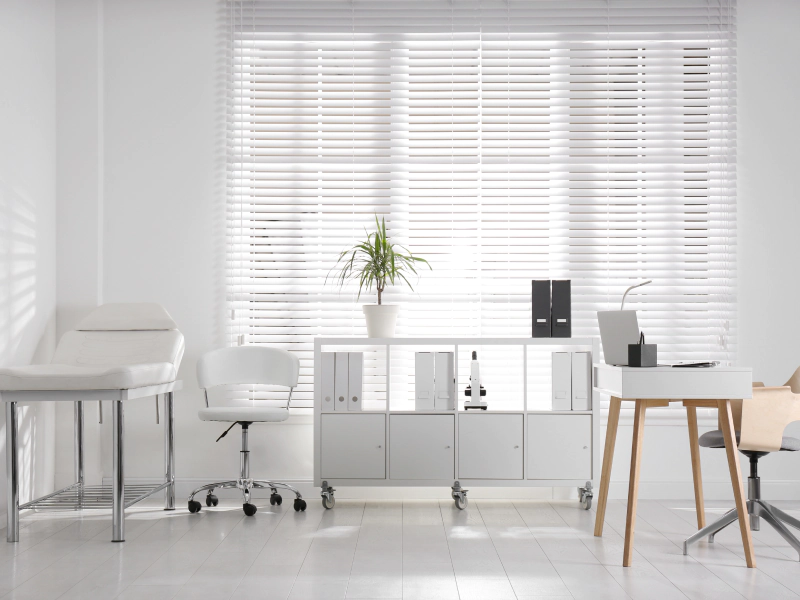
Saddleback Shutters & Blinds approaches commercial window coverings by first looking at what the glass needs to do for the business. We assess the direction of sunlight, workstation placement, outward visibility, privacy, window dimensions, operating frequency, mounting conditions, and the way employees and customers use the space. For many commercial applications, roller screen shades can provide a useful balance. The fabric can reduce harsh glare while maintaining varying degrees of outward visibility.
That means a front desk employee does not necessarily have to choose between seeing outside and controlling the sun. We personally measure each opening and plan the treatment around the business environment. Every product is custom ordered specifically for the windows, and our family handles installation without subcontracting the work.
Computer screens and direct sunlight are a difficult combination. An office can have excellent natural light in the morning and become uncomfortable once the sun reaches a particular group of workstations. Employees may start adjusting monitors, changing seats, lowering improvised coverings, or working around reflections on their screens. Completely blocking the windows is one solution, but it may remove more daylight than necessary. Commercial roller shades using appropriate screen fabrics provide another approach.
Screen material can filter direct solar intensity while retaining varying levels of outward visibility. The correct fabric depends on the glass and the problem. A treatment for a heavily exposed west-facing window may need a different balance than one used on a window receiving softer indirect light. We look at where employees actually sit. We consider the height of monitors in relation to the glass. We identify when glare becomes disruptive. That information helps determine which commercial shades make sense instead of simply covering every office window with the same material.
Visibility can be operationally important in a commercial environment. A receptionist may need to see customers approaching the entrance. Employees in a storefront may need awareness of activity outside. A business may value the openness created by its glass and not want the windows to feel permanently closed. This is where fabric selection becomes important. A commercial screen shade can reduce direct sunlight while maintaining an outward view to varying degrees.
The relationship depends on the openness of the fabric, its color, lighting conditions, and the amount of solar exposure. We do not assume that every screen material provides the same visibility. During the consultation, we identify which sightlines matter. If employees need to see a walkway, entrance, parking area, or exterior approach, that becomes part of the treatment decision. Glare control should not create a new operational problem by blocking a view the business depends on.
Commercial window treatments often need to manage competing priorities. A highly open screen fabric may preserve more outward visibility but provide less screening. A denser material may increase coverage while changing the view. A private office may need something different from a reception area. A conference room may need another level of visual separation. That is why we avoid choosing one commercial shade specification for an entire property without looking at how each area is used.
We can divide the project by function. Reception windows may prioritize glare control and visibility. Employee work areas may focus on screen comfort. Meeting rooms may require more privacy. Storefront glass may need to balance customer-facing appearance with afternoon solar exposure. The window treatment should follow the work happening behind the glass. This room-by-room approach also helps avoid paying for features where they do not provide a practical benefit.
Commercial roller shades are frequently useful because their design is straightforward and adaptable across broad expanses of glass. When raised, the fabric rolls into a compact area above the opening. When lowered, it creates a clean plane across the window. For offices and storefronts, this can provide solar control without adding excessive visual complexity. Screen fabrics are particularly useful where glare needs to be reduced without completely eliminating the outward view. The shade can create a more comfortable working condition while allowing the glass to remain part of the space.
Large openings still require careful planning. Width, height, mounting surface, fabric selection, hardware, and expected frequency of operation all affect the final configuration. We personally measure the glass rather than assuming repeated windows are identical. Even within the same building, trim, frames, mullions, obstructions, and surrounding conditions can vary. Custom ordering allows the treatment to follow those actual dimensions.
Roller shades are not the only option for a business. Commercial blinds can be useful when adjustable slats provide a better response to changing daylight and privacy. Slats allow occupants to alter the angle of incoming light rather than only raising or lowering a fabric surface. That can work well in certain offices or rooms where directional control is useful throughout the day. The choice between blinds and shades depends on the space. If the main concern is persistent screen glare across a large glass area, a roller screen fabric may provide a cleaner solution. If employees need frequent adjustment of light direction, blinds may deserve comparison.
Maintenance also matters. The amount of daily use, dust exposure, window size, and accessibility can influence which product is practical over time. Our residential custom blinds installation experience also gives us a useful basis for comparing fit and operation, but commercial selections are made according to the demands of the business environment.
A window treatment can technically cover the glass and still fail to solve the workplace problem. Workstation placement is one reason. Consider two desks in the same office. One employee may sit perpendicular to the window and experience little screen reflection. Another may face a monitor positioned directly in the path of afternoon sunlight. The glass is the same. The experience is not. When evaluating office window treatments, we look beyond the opening itself.
We consider where people work in relation to the sun. We identify which windows cause the most disruptive glare and at what times. We also look at whether employees need to maintain an outward view from their normal positions. That information helps us choose the treatment around actual use. It can also help prioritize a larger project. Some windows may need stronger solar control than others. The objective is not simply visual consistency from room to room. It is to create a workspace that functions more comfortably while still maintaining an appropriate overall appearance.
Front-facing glass often serves the business in two directions. Customers see in. Employees see out. That visibility can be important at reception desks, customer service areas, and storefront entrances. Strong sunlight can interfere with it. A receptionist looking toward an entrance may have direct afternoon sun in the same line of sight. Closing the window completely removes the glare, but it may also remove the ability to see who is approaching.
An appropriate screen treatment can provide another option. The goal is to reduce the intensity of the sunlight while retaining useful visibility through the glass. Fabric openness and color influence that balance. We discuss what employees need to see and from where. We can then evaluate screen options around that practical requirement. This is a different decision than selecting a shade for a private back office. Commercial window coverings should reflect those differences within the business.
Storefront glass can create demanding installation conditions. The openings may be tall. They may span substantial widths. Frames, mullions, signage, displays, doors, and surrounding finishes can affect where hardware can be positioned. A treatment also needs to fit the visual character of a customer-facing environment. We take exact on-site measurements and evaluate the available mounting surfaces before specifying the treatment. For larger spans, hardware selection becomes particularly important. The headrail, brackets, and mounting components need to suit the size and intended daily use of the treatment.
The objective is not to place residential-size hardware on a commercial opening and hope it performs the same way. The system should be planned around the scale of the glass. We also consider how the treatment looks from both sides where relevant. A storefront is part of the interior workspace, but it may also contribute to the exterior appearance customers see before entering.
Commercial spaces can have material requirements that differ from residential projects. Depending on the property, application, and applicable requirements, certain areas may call for specialized materials, including flame-rated fabric constructions. Those requirements should be identified before the product is ordered. We do not assume that every residential fabric is appropriate for every commercial environment.
The business, building conditions, intended application, and applicable code requirements need to be considered. Where a specific rating or specification is required, the selected material should be verified for that project. This is especially important when a property manager, architect, facility representative, or other project stakeholder has established requirements for the space. Product selection should support those requirements rather than treating compliance as an afterthought.
A commercial treatment may be operated much more frequently than a shade in a spare bedroom. Employees may adjust it throughout the workday. A front-facing treatment may move as the sun changes. Meeting rooms may transition between open and private conditions repeatedly. That frequency affects the way we think about hardware. The treatment needs to be sized and mounted for the opening and its expected use. For larger commercial applications, reinforced headrails and appropriately selected mounting hardware may be necessary depending on the product and configuration.
During installation, we secure the system to suitable mounting points and test its operation. The shade or blind should move correctly across its intended range without binding or unnecessary interference. If the project includes compatible motorized products, those controls also need to be tested before the installation is considered complete.
Motorization can be useful in commercial spaces, but it should solve a practical problem. Tall shades can be difficult to access. A series of large windows may require repeated adjustment throughout the day. A conference room may benefit from convenient control when its use changes. In those situations, compatible automated window coverings may make operation easier. The decision depends on the selected treatment, window dimensions, frequency of adjustment, available controls, and project requirements.
We do not add automation simply because it is available. A manually operated commercial roller shade can be the right answer for an accessible window that needs occasional adjustment. A group of large treatments may present a stronger case for motorization. We discuss how the business expects to use the coverings before determining which operating system makes sense.
Consistency does not require every window to use exactly the same product. A commercial property can have several distinct environments. The front reception area may need screen shades that maintain exterior visibility. Private offices may need greater privacy. A conference room may need stronger visual coverage for meetings or presentations. A break area may simply need straightforward glare reduction. Large doors or unusually wide openings may call for a different treatment format altogether. The project can still feel coordinated. Color, material families, hardware appearance, and installation details can create visual continuity even when function varies by area. This approach allows the window coverings to serve the business instead of forcing every room into one specification. For larger projects, we identify the different use cases during the site assessment and organize recommendations around them.
Some commercial spaces receive enough direct solar exposure that interior shades are only part of the conversation. Interior commercial roller shades can reduce glare and provide practical light control from inside the workspace. Exterior roller shades approach solar exposure before it reaches the glass or covered area. For heavily exposed windows, exterior control may deserve consideration where the building and installation conditions allow it. The right approach depends on the property.
Interior shades may be more practical where privacy, daily employee adjustment, and straightforward access are priorities. Exterior treatments may be useful where intense solar exposure is driving the problem. In some cases, different treatments can serve different purposes. We assess what the business is trying to accomplish before recommending where the solar control should happen.
Commercial window treatments are functional equipment, but they are also visible throughout the workplace. Uneven mounting, inconsistent heights, poor alignment, or treatments that do not relate cleanly across adjacent windows can make a finished space feel disorganized. This becomes especially noticeable across a row of offices or storefront windows. We consider alignment as part of installation. Where several treatments appear together, we look at how their headrails, fabric positions, and surrounding architectural lines relate.
The owner handles the measurements, and our family completes the installation. We never subcontract those steps. That continuity helps us carry the original layout decisions through to the finished space. The goal is straightforward: the treatments should work correctly and look like they were planned for the building.
Commercial projects begin with how the property operates.
We discuss glare, privacy, heat, outward visibility, customer-facing glass, workstation comfort, or other concerns driving the project.
We look at the windows in relation to desks, screens, entrances, conference areas, customer traffic, and normal daily activity.
We determine where commercial shades, commercial blinds, screen fabrics, or other configurations make sense.
Where specific ratings or building requirements apply, those specifications need to be considered before final product selection.
The owner personally measures the windows and evaluates mounting surfaces, frames, mullions, clearances, and hardware requirements.
Each product is ordered around the confirmed dimensions, material, operation, and project requirements.
Our family installs the treatments, checks alignment, and tests the operating mechanisms before the project is finished. Keeping measurement and installation with our family gives the project continuity from the first site discussion through the finished windows.
A business environment creates different priorities than a residential room.
A successful commercial treatment should make the workspace easier to use without creating a new obstacle.
Commercial roller shades with appropriately selected screen fabrics are often useful because they can reduce harsh sunlight while maintaining varying degrees of outward visibility. The correct fabric depends on exposure and workstation placement.
Yes, certain screen fabrics are designed to maintain varying levels of outward visibility while reducing solar glare. Fabric openness, color, lighting conditions, and the required level of screening all affect the result.
Some commercial applications may require specific material properties or ratings, including flame-rated constructions. Applicable requirements should be identified and the selected product verified before ordering.
Yes. Reception areas, offices, conference rooms, storefronts, and other spaces can have different glare, privacy, and visibility requirements. Treatments can be coordinated visually while being selected according to function.
Compatible commercial treatments may offer motorized operation. It can be useful for tall windows, large treatments, grouped openings, or areas where coverings are adjusted frequently.
Show us where glare, privacy, or visibility affects daily work. We’ll assess the glass and recommend treatments around how the space operates.