Get Your Free In-Home Personalization
- Home
- Kuna, ID
Kuna, ID
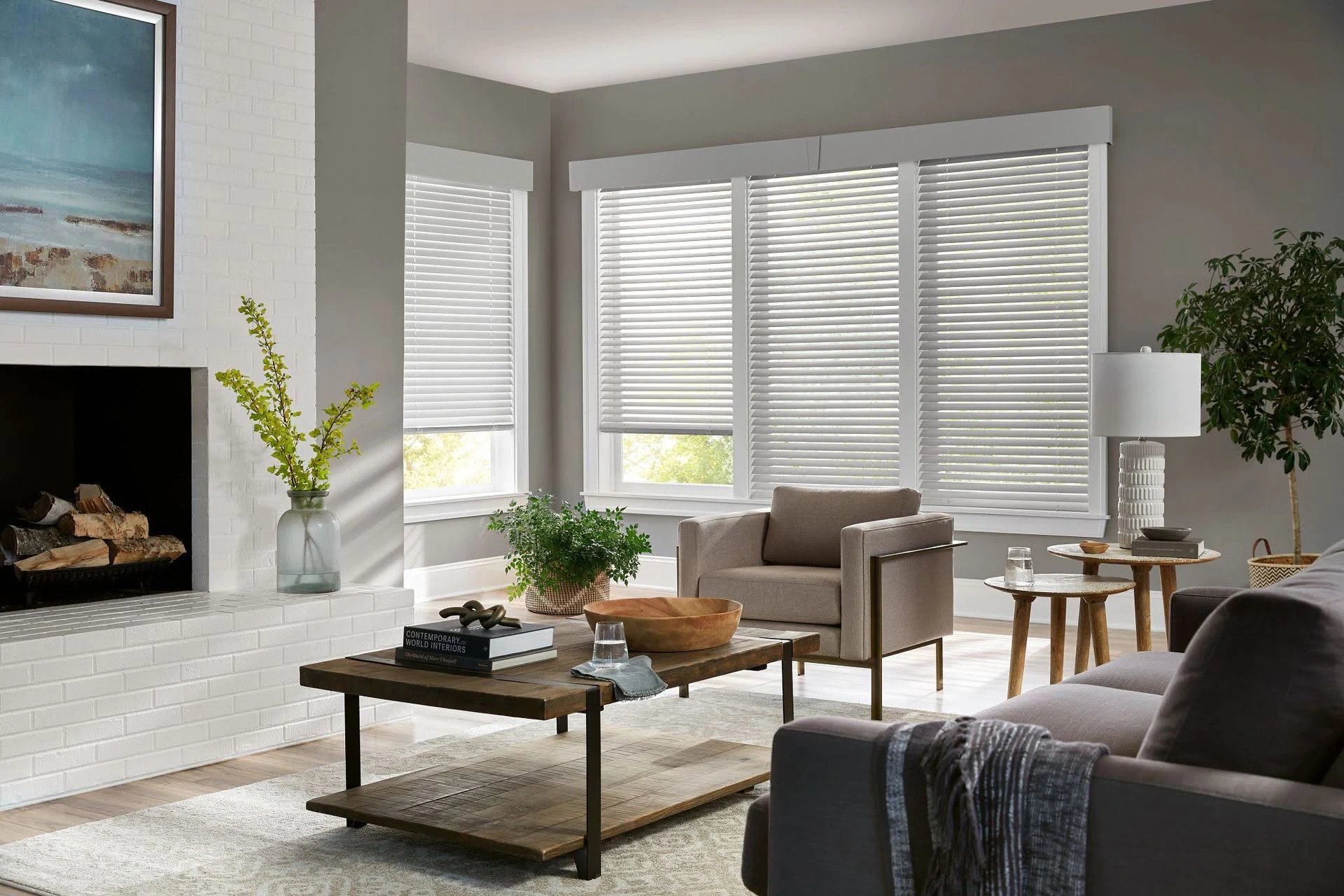
Specialty openings often become architectural features because they are different. Covering them successfully means deciding which details should remain visible and which need to become part of the treatment.
An arch, for example, may call for a completely different layout than a rectangular bedroom window. An angled opening introduces its own dimensional considerations. Bay windows require attention to how individual sections meet and how neighboring treatments interact. Transoms can raise questions about whether the treatment should relate to the glass below or remain visually separate.
Plantation shutters can be particularly useful for these situations because they are constructed around the dimensions and configuration of the opening. Frame style, panel layout, louver proportions, and other details can be considered as part of the design.
But a custom product does not automatically mean a good result.
The measurements and opening layout still have to be correct. That is why Saddleback keeps this part of the project owner-led. We examine the sill, frame, mounting surfaces, depth, surrounding trim, and shape before anything is ordered.
Sometimes shutters are the right direction. Other times a custom blind or shade may provide a cleaner or more practical answer. Our role is to explain those differences and help you select what belongs at the window rather than trying to sell the same solution for every opening.
Plantation shutters are more integrated with a window than many other coverings. Once installed, their frames and panels become part of how the opening looks, which makes proportion and layout especially important.
The first decision is not necessarily color. It may be material.
Real wood shutters can complement interiors where natural material, stain, grain, and warmth are important. They can coordinate with hardwood flooring, cabinetry, furniture, beams, or existing wood trim. Depending on the selected product, stain and painted finishes provide different ways to connect the shutter to the room.
Composite plantation shutters offer a different set of characteristics. Their construction can make them useful where moisture resistance, straightforward cleaning, or changing environmental conditions deserve greater consideration.
The right answer depends on where the treatment will live.
A main living room with substantial wood details may point toward one material. A bathroom or other moisture-prone area may point toward another. Maintenance expectations, sunlight, insulation, style, and budget also influence the choice.
Louver sizing adds another layer. Louvers affect the visual scale of the shutter and how you control daylight, privacy, and the view. Frame styles and panel layouts can further change the finished appearance.
We work through those choices at the actual windows so you can make decisions in context rather than trying to build the entire room from a product sample.
It is easy to treat wood versus composite as a simple design preference. In practice, the room itself should have a voice in that decision.
Wood plantation shutters can bring the character of a natural material into the space. When matching or coordinating with existing wood tones matters, physical samples can help you see how a stain relates to nearby flooring, furniture, cabinetry, or trim.
Composite shutters may make more sense when the room creates different demands. Moisture resistance can be important in bathrooms and other areas where environmental conditions fluctuate. Easy-care surfaces may also appeal to homeowners who want the shutter appearance without the same maintenance considerations as natural material.
Neither option should win automatically.
We would rather talk about where the shutter is going, how much sunlight reaches it, what surrounds the window, how you expect to clean it, and the appearance you want to achieve. That conversation gives the material choice a practical basis.
The same thinking applies throughout our custom window coverings. Faux wood blinds may be preferable to real wood in one room. A cellular shade may make more sense than either if insulation is the dominant concern. A roller shade may be a stronger answer where streamlined glare control matters.
Not every treatment belongs in every room. The decision should follow the space.
Specialty openings may lead the conversation, but many homes contain a mix of standard windows, distinctive shapes, moisture-prone rooms, bedrooms, wide glass, and sun-exposed spaces. These are the treatment categories we would prioritize when planning a Kuna property:
These options give us room to solve different problems without making a property feel disconnected. A home can use shutters on prominent architectural windows, faux wood in moisture-prone areas, cellular shades where insulation matters, and other custom shades in bedrooms while maintaining a coordinated design direction.
Measuring a rectangular window may sound straightforward. Specialty openings demonstrate why custom window treatment installation involves more than recording two numbers.
An arch has curves and transition points. An angled opening changes across its width. Bay windows introduce relationships between multiple sections. A transom may need to align visually with the treatment below it. Even a conventional opening can have uneven surfaces, unusual casing, shallow depth, handles, or other details that affect the available mounting area.
We evaluate those conditions before placing the order.
The owner personally handles measurements and opening layouts for Saddleback Shutters & Blinds. Depending on the product, we consider width, height, sill depth, mounting surfaces, frame conditions, clearance, trim, and the hardware required for operation.
Plantation shutters can require additional planning around louver sizing, frame selection, panel configuration, hinges, and breakpoints.
Keeping this responsibility with the owner is intentional. The measurements influence manufacturing, and the manufacturing decisions influence installation. Separating those stages between unrelated people creates more opportunities for important details to be lost.
Once measurements and selections are confirmed, the product is custom ordered specifically for the opening.
Our family returns for installation rather than sending the project to a subcontracted crew. That allows the plan discussed at the beginning to remain connected to the finished result.
Privacy is rarely an all-or-nothing decision.
During the day, you may want natural light while reducing direct visibility into a room. Later, you may want greater coverage without changing the treatment completely. Plantation shutters provide adjustable louvers that allow the amount and direction of light to change as your needs change.
This makes louver selection more than a design detail.
The size and position of louvers influence the appearance of the shutter, sightlines through the opening, and the way daylight enters. Window height, room scale, surrounding architecture, and the view can all affect which proportions feel appropriate.
Bedrooms may prioritize privacy differently from living spaces. A street-facing room may need more frequent adjustment. A home office may need daylight redirected away from a screen. A prominent front window may place greater emphasis on how the shutter relates to the architecture.
We talk through these scenarios rather than assuming one louver configuration should be repeated throughout the property.
If a shutter does not provide the type of light control you want, another product may be worth comparing. Cellular shades, roller shades, dual shades, and blinds all interact with daylight differently.
The useful question is not whether shutters are better than shades. It is whether their type of control fits what you want from that particular opening.
Windows can influence how a room feels as outdoor temperatures change. If insulation at the glass is a priority, the construction of the treatment deserves attention alongside its appearance.
Plantation shutters create a substantial treatment within the opening. When properly fitted and closed, their panels and louvers provide another physical layer between the room and the glass.
Cellular shades approach insulation differently. Their honeycomb construction forms pockets of trapped air within the treatment. For homeowners comparing energy-efficient window coverings, this design makes cellular shades an option worth discussing in rooms where temperature changes near the glass are noticeable.
The two treatments create very different aesthetics.
A plantation shutter becomes an architectural feature. A cellular shade has a softer, more compact appearance and can disappear more readily when raised. Cellular fabrics can also be selected in different opacities, allowing the same product category to address filtered daylight or increased room darkening.
Which one makes sense depends on more than insulation.
We also consider privacy, maintenance, window shape, operating preference, desired appearance, and budget. A distinctive front window may call for shutters, while bedrooms elsewhere in the home may benefit from cellular shades.
This is another reason we do not try to select custom window treatments one product category at a time. The better question is how each room contributes to the way the entire property works.
Trying to match a shutter stain from memory is difficult. So is deciding whether a painted finish works with existing trim when you are looking at it under completely different lighting.
We bring physical samples into your home during our free in-home personalization.
That gives you a chance to compare real materials with the surfaces they need to live beside. A wood stain can be viewed next to flooring or cabinetry. A painted shutter sample can sit against the trim. Faux wood can be compared with surrounding finishes. Shade fabrics can be held at the window to see how daylight changes their appearance.
For a home with several treatment types, this process also helps us coordinate rather than duplicate.
Plantation shutters in a main living space do not require identical treatments in every bedroom. Wood blinds, faux wood blinds, and custom shades can be selected in related tones so the home feels connected without sacrificing room-specific function.
We can also discuss maintenance while looking at the materials themselves. Natural wood, composite, woven materials, and fabrics have different care considerations. If easy cleaning is high on your list, that should influence the recommendation before the product is ordered.
The samples are there to help you make a more informed choice, not to push you toward the highest-priced option.
Specialty openings reward careful planning. Before ordering a treatment, consider four issues that can affect both appearance and daily use.
These decisions are easier to make when the conversation happens at the windows. You do not need to determine the exact product before we arrive. Show us the opening, explain what you want from it, and we can work through the choices together.
Plantation shutters can be configured for many specialty openings, including certain arches, angles, bay windows, and other custom shapes. The specific solution depends on the opening, which is why we evaluate and measure the window before discussing the final configuration.
That depends on the room. Natural wood can provide warmth and finish flexibility, while composite materials can be useful where moisture resistance and easier maintenance matter. We help compare the options in the space where they will be installed.
Custom measurements can help create a clean, closely fitted result, but no window covering should be selected based on unrealistic promises of eliminating every trace of light. We evaluate the opening and explain what to expect from the chosen product and configuration.
Yes. Using different window coverings can be a practical way to meet room-specific needs. Related colors, finishes, and proportions can help the treatments feel coordinated even when the product types change throughout the home.
The owner personally handles measurements and opening layouts for Saddleback Shutters & Blinds. We do not subcontract measurements or installation, keeping responsibility connected from the initial window evaluation through the finished project.
Mon – Fri: 8:00 AM – 7:00 PM
Sat – Sun: Closed
Have an unusual opening or a window that is difficult to cover in Kuna, ID? Tell us about it, and we’ll help you compare custom-fit options for your space.