Get Your Free In-Home Personalization
Custom Blinds Installation
Blinds work better when they are selected, measured, and installed for the actual window. Saddleback Shutters & Blinds provides custom blinds installation in Eagle, ID with owner-led measuring, custom ordering, and installation completed by our family.
When blinds do not fit correctly, the problem is usually noticeable every time you use them. A treatment that is slightly too narrow can leave unnecessary light gaps. An inside-mounted blind may interfere with a handle or fail to sit properly because the frame does not provide enough usable depth. An outside-mounted treatment can look out of proportion when its coverage and relationship to the trim were not planned carefully.
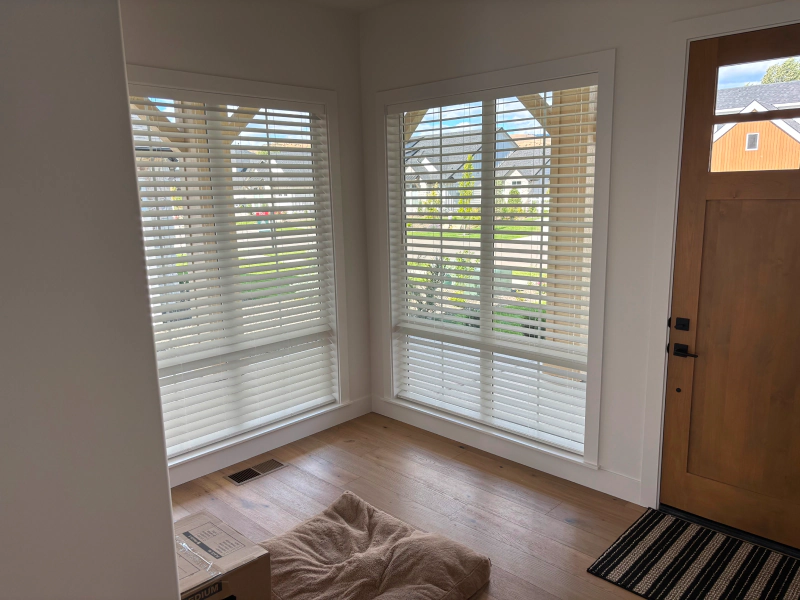
Even windows that appear identical can vary when measured individually. That is why our custom blinds installation process starts in your home rather than with a standard size from a shelf. Saddleback Shutters & Blinds begins with a free in-home personalization. We look at the windows, discuss what you want to change, and help you compare custom window blinds according to privacy, sunlight, maintenance, style, operation, and budget. Then we measure.
The owner personally handles measurements and opening layouts. We account for more than width and height. Trim depth, mounting surfaces, operational clearance, surrounding hardware, and the selected mounting style can all affect the finished fit. Every product is custom ordered specifically for your windows. Our family also handles the installation. We never subcontract measurements or installation, which keeps responsibility for the project connected from the first visit through the final adjustment. That continuity is especially important with made to measure blinds. The finished product depends on the information gathered before manufacturing begins.
Accurate measurements are the foundation of a clean installation, but measuring for blinds involves more than stretching a tape measure across the window. First, we determine how the treatment should relate to the opening. An inside mount positions the blind within the window frame when sufficient depth and suitable mounting conditions are available. This can create a contained appearance that leaves more of the surrounding trim visible. An outside mount places the treatment beyond the opening. That approach may make more sense when frame depth is limited, when greater coverage is desired, or when the physical conditions of the window make an inside mount impractical. Neither mounting style is automatically better.
We consider the window, trim, available depth, hardware, desired coverage, and appearance before deciding. Clearance matters too. Handles, locks, cranks, molding, sills, and other components can affect where a blind can sit and how freely it can operate. A measurement that ignores these details may technically fit the opening while creating problems during everyday use. We also measure individual windows rather than assuming several similar-looking openings are exactly the same.
Small differences can matter once a product is manufactured to a specific size. For arches, bay windows, and other unusual configurations, planning becomes even more important. The relationship between neighboring treatments, angles, mounting surfaces, and operating clearance needs to be considered before an order is placed. Our goal is not simply to make the blind fit inside a set of dimensions. It should fit the way the window actually works.
Once the opening is understood, we can focus on the blind itself. Different materials suit different rooms, design preferences, and maintenance expectations. During your in-home personalization, we bring physical samples so you can see finishes in your own lighting rather than trying to make the decision from a photograph.
Custom wood blinds can bring the warmth and variation of real wood into living rooms, offices, dining areas, and other spaces where natural material is part of the design.
Custom faux wood blinds provide a different option for homeowners who want the appearance and adjustable slat control associated with blinds while prioritizing easier maintenance or moisture resistance.
For wide doors or broad horizontal openings, custom vertical blinds may make more sense than forcing a horizontal blind into an application it was not selected to handle.
We also consider how the blind relates to surrounding materials. Trim, flooring, cabinetry, wall color, furniture, and existing wood tones can all affect how a finish looks once installed. A sample that appears warm under one type of lighting can look noticeably different beside the actual window. This is why we prefer to make those decisions in the room.
The purpose of the consultation is not to show you the largest possible collection and leave you to sort it out. We narrow the choices according to the space and explain why one option may fit the room better than another.
Blinds give you a type of control that is different from a single sheet of shade fabric. Adjustable slats allow you to change the angle of incoming daylight throughout the day. You can redirect light, increase privacy, open the view, or raise the treatment when you want the window substantially uncovered. That flexibility can make custom window blinds useful in rooms where conditions change.
An office may need glare redirected away from a screen during part of the day. A street-facing room may require more privacy without remaining completely dark. A living area might benefit from softened direct sunlight while still retaining some daylight. The size, material, finish, and operation of the blind all influence how it performs.
If your main goal is a softer fabric appearance or a specific level of room darkening, window shade installation may be worth comparing instead. Shades offer different fabric opacities and constructions that can be selected around blackout, light filtering, solar control, or insulation. That comparison is part of our process. We do not assume blinds belong in every room simply because you started by asking about blinds. Not every treatment works for every space. We consider privacy, sunlight, insulation, maintenance, style, and budget, then recommend what fits rather than automatically pointing toward the most expensive option.
Buying standard blinds and installing them yourself can work for some straightforward windows. But it also introduces compromises that are easy to underestimate until the product is already mounted. The first is sizing. Retail blinds are manufactured around predetermined dimensions. Your opening has its own dimensions. Making one conform to the other can require accepting wider gaps, altered proportions, or a mounting position selected around the available product rather than the window.
The second issue is measurement. A window that appears simple can have limited depth, uneven dimensions, projecting hardware, or trim that affects the installation. Bay windows introduce interactions between neighboring blinds. Specialty shapes require another level of planning.
The third issue is installation itself. A blind can be the correct nominal size and still look unfinished if the brackets are poorly positioned, the unit is not level, or the operating components have not been adjusted correctly. We are also familiar with correcting installations where DIY work or previous installation left light gaps, alignment problems, or untidy finishing. Custom blinds installation changes the order of the process.
Instead of choosing a predetermined product and trying to make the window accommodate it, we evaluate the opening first. Measurements and mounting conditions inform the order. The blind is manufactured to those specifications, then installed and tested at the window it was made to cover. That is the difference behind made to measure blinds.
Not every window is a straightforward rectangle sitting by itself on a flat wall. Bay windows are a good example. Several sections meet at angles, and each blind needs enough space to operate without interfering with the treatment beside it. Projection, mounting position, hardware, and the relationship between the individual units all affect the finished appearance. Arched and other specialty openings introduce different questions. Sometimes a particular blind configuration is appropriate. In other cases, another treatment may work better with the architecture.
Custom plantation shutters are worth comparing for certain specialty openings because shutters can be designed around arches, angles, bays, and other window conditions where an architectural treatment makes sense. The right answer depends on the opening. We would rather recommend another product than force a blind into a window where it will not perform or look the way it should. That is also why the owner handles opening layouts personally. With unusual windows, small planning details can have an outsized effect on the finished result. Where treatments meet, how they clear surrounding surfaces, how they operate, and how they align visually all deserve attention before manufacturing. Custom ordering gives us flexibility, but accurate planning is what makes that flexibility useful.
One of our strongest differentiators is simple: the people responsible for the project stay connected to it. We never subcontract measurements or installations. The owner personally measures your windows and evaluates the opening before the order is placed. That means the dimensions are gathered in the context of the treatment being discussed, the mounting method, and the conditions we observed during the consultation. When the custom blinds arrive, our family handles the installation.
Depending on the number of windows and project scope, installation may take roughly one to three hours. More involved projects can require additional time, but speed is not the standard we use to decide whether the work is finished. Operation is. Each treatment is mounted and aligned, then tested before we consider the installation complete. We check that the blind sits level. Operating mechanisms should move smoothly. Cords, where applicable, should retract evenly. Compatible motors should respond properly. Raising and lowering the blind should not reveal an installation issue that could have been corrected before we left. These may sound like small details. They are also the details you interact with every day. A custom product should not merely look correct while stationary. It should operate the way it was designed to operate.
Our blinds installation process is straightforward, but every step serves a purpose.
We begin during your free in-home personalization by discussing the windows and what you want from them. Privacy, sunlight, appearance, maintenance, operation, and budget help narrow the appropriate choices.
We bring materials and finishes into your home so you can evaluate them against actual trim, flooring, furniture, cabinetry, and natural light.
The owner records the dimensions and evaluates trim depth, clearance, mounting surfaces, surrounding hardware, and other conditions that affect fit.
Once the material, finish, mounting approach, and operating details are established, the treatment can be ordered for the measured opening.
Every product is special ordered specifically for your windows rather than selected from standard retail inventory.
Our family returns for window blind installation. We mount and align the treatments, check their operation, and make the necessary adjustments before completing the project.
Manufacturer warranties are backed by local service. Warranty service is provided at no additional cost when future adjustments covered by that support are needed.
This process keeps the design, measurement, ordering, and installation connected instead of treating them as separate transactions.
If you are considering custom blinds, a few details are worth thinking about before choosing a product.
A good blinds installer should be willing to explain these tradeoffs before asking you to make a final selection.
Custom blinds are versatile, but they are one category within a larger group of custom window treatments. If adjustable slats and straightforward control over the direction of daylight are priorities, blinds can be a strong fit. If you prefer fabric, want a cleaner uninterrupted surface, or need specific opacity choices, custom window shades may be more appropriate. If you want a treatment that becomes a more permanent architectural part of the opening, custom plantation shutters deserve consideration.
Even within blinds, material changes the decision. Wood blinds provide natural material and visible grain. Faux wood blinds can offer easier maintenance and moisture resistance in rooms where those characteristics matter. We explain these differences during the consultation because the purpose is not simply to complete a blinds installation. It is to leave you with a treatment that fits the room.
That distinction is important to how Saddleback Shutters & Blinds works. We are family-owned and operated, have been in the industry since 2001, and do not use high-pressure sales tactics. If another type of window covering makes more sense after we see the space, we can discuss it.
Custom blinds are ordered according to the dimensions and mounting conditions of the actual opening. This allows the treatment to be planned around frame depth, trim, clearance, and surrounding hardware rather than making the window accommodate a predetermined retail size.
Yes, certain bay windows and specialty configurations can use custom blinds, but they require additional planning around angles, clearance, mounting, and neighboring treatments. We evaluate the opening before recommending a configuration.
Installation is typically completed in one to three hours depending on the number of treatments, window conditions, and scope of the project. More involved installations can take longer. We test each treatment before considering the work complete.
The owner personally handles measurements and opening layouts. We do not subcontract measurements or installation, which keeps responsibility for the fit connected throughout the project.
Yes. We check alignment and operation before finishing the installation. Depending on the selected product, that can include confirming smooth movement, even cord retraction, level positioning, and proper response from compatible motorized controls.

Let us see the opening before you choose the blinds. We’ll compare materials, measure the details, and plan a custom fit for your space.