Get Your Free In-Home Personalization
- Home
- Nampa, ID
Nampa, ID
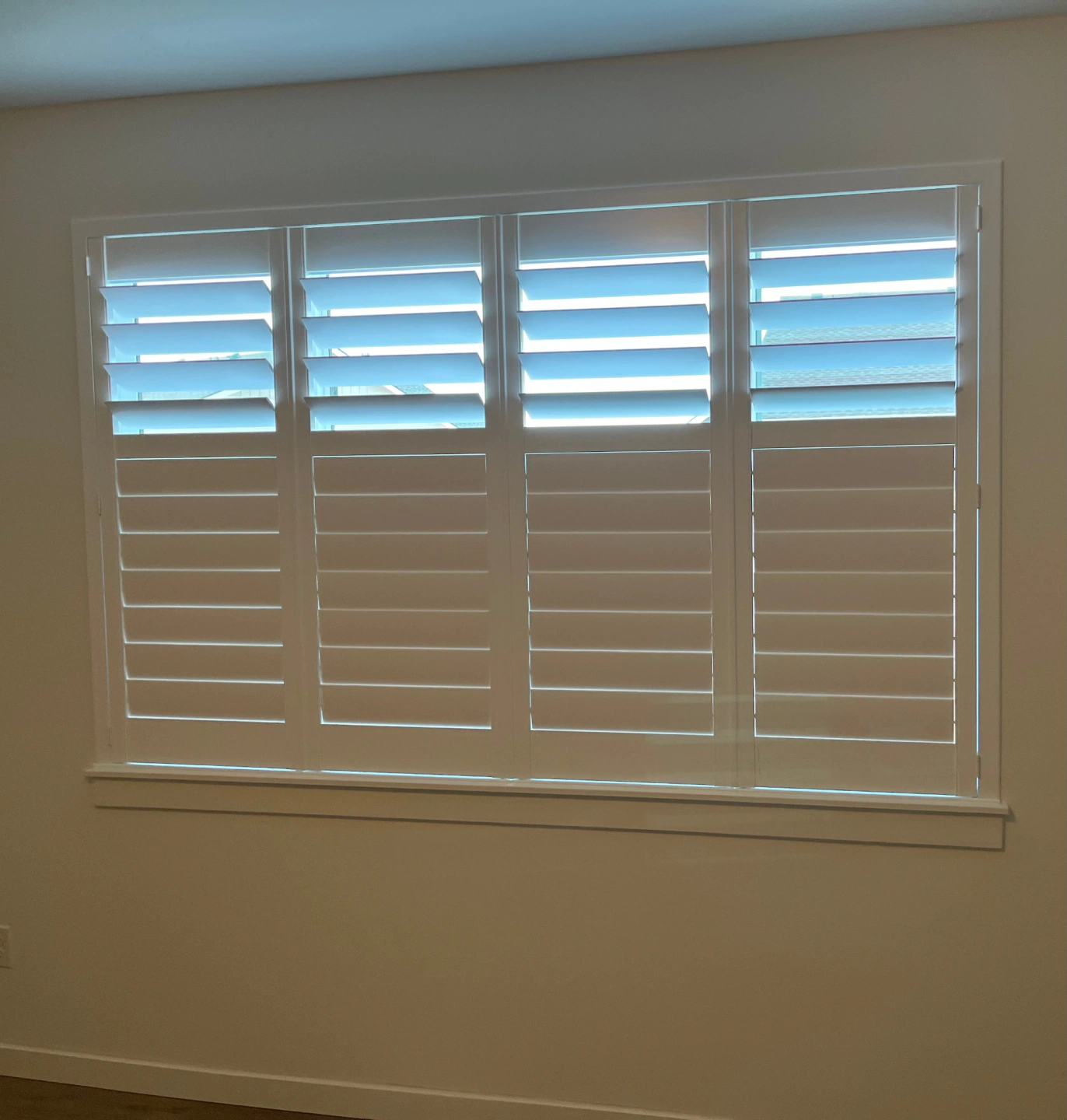
The term custom shades covers a wide range of products, and one of the biggest differences between them is what happens when sunlight reaches the fabric.
A light-filtering material softens incoming daylight rather than eliminating it. That can make it useful in living areas, kitchens, dining spaces, and rooms where you want natural light without the intensity of uncovered glass.
Blackout materials take a different approach. They are intended for spaces where significantly reducing incoming light is a priority, such as bedrooms, nurseries, media spaces, or rooms used by people who sleep during daylight hours. The fabric matters, but so does the installation. Light can still enter around the perimeter of a shade, which is why expectations about room darkening should be discussed before the treatment is ordered.
Solar shades solve another problem. Instead of focusing primarily on darkness, solar fabrics can reduce glare and UV exposure while preserving varying degrees of outward visibility. They can be useful in home offices and living spaces where completely closing off the window would defeat part of the reason you enjoy the room.
The right choice starts with a simple question: what do you want the sunlight to do once it reaches this particular window?
Selecting fabric by color alone leaves out some of the most important differences between custom window coverings. Opacity, weave, construction, and the way a material responds to direct sunlight can have a major effect on the room.
Blackout shades are worth considering when reducing incoming light is the primary objective. Bedrooms and nurseries are common applications because daylight can interfere with sleep schedules. They can also be useful in media rooms where bright reflections affect television viewing.
However, blackout fabric should not automatically be interpreted as a completely light-free room. The treatment’s mounting style and the gaps required for operation can allow some light around its edges. We discuss these details so you can choose a configuration based on realistic expectations.
Light-filtering shades preserve more daylight while diffusing its intensity. They can soften the appearance of a bright window and provide varying levels of privacy depending on the selected material.
Solar shades are particularly useful where glare and UV exposure are bigger concerns than room darkening. Different openness factors influence the balance between solar control and outward visibility.
During our in-home personalization, you can hold these materials at your own windows. That makes the differences easier to understand than comparing fabric names on a screen or trying to imagine how a sample will perform in your home.
You do not necessarily need to begin a window treatment project by replacing every covering in the house. Start with the windows creating the most noticeable problem.
A bedroom that becomes bright earlier than you want may move to the top of the list. A west-facing living area where afternoon sunlight lands directly on furniture may have a different priority. A home office where glare crosses the monitor at the same time every day presents another specific problem.
Identifying that problem helps us narrow the treatment options before discussing color and design.
For homeowners considering custom window treatments, several categories are particularly relevant to light management:
These products solve light problems differently. The point of the consultation is not to decide which one is universally better. It is to determine which approach makes sense for the room in front of us.
A bright room and a comfortable room are not always the same thing.
Direct sunlight across a computer monitor can make a home office difficult to use. Reflections across a television can interfere with a living room or media space. Intense afternoon light can make people close a window covering completely even when they would prefer to keep some connection to the outdoors.
Solar shades can provide a middle ground.
Their fabrics are designed to filter sunlight, and different openness levels affect how much light and outward visibility remain. A more open material may preserve more of the view, while a tighter construction provides greater solar control. Color and other product characteristics can also influence performance and appearance.
The right balance depends on the window and the customer’s priorities. If nighttime privacy is important, for example, a solar shade may need to be considered differently from a treatment chosen primarily for daytime glare. Some spaces may benefit from a different product or a layered approach.
This is why we do not simply ask whether you want shades. We ask when the glare happens, where it lands, how much of the view matters, and what you expect from the window after sunset.
Those answers help determine whether solar shades, roller shades, blinds, shutters, or another type of window covering should be considered.
Sleep spaces deserve their own window treatment conversation.
A bedroom may receive direct morning sunlight long before the person sleeping there wants to wake. A nursery may need reduced daylight during daytime naps. Exterior lighting can also remain visible after sunset depending on the window and surrounding environment.
Blackout window shades can help reduce the amount of light entering these spaces, but fabric selection is only part of the equation.
The treatment needs to fit the opening correctly. Inside-mounted shades require operating clearance, and the necessary space between the fabric and window frame can allow some perimeter light. Outside-mounted configurations may provide additional coverage in certain situations, but they also create a different finished appearance.
We discuss these tradeoffs before ordering.
Privacy is another consideration. A material that works well for daylight control should also provide the level of nighttime coverage you expect. For children’s rooms, cordless operating systems may be worth considering because they eliminate dangling operating cords. Depending on the selected shade, motorized operation may provide another option.
The goal is not to promise absolute darkness. It is to understand how dark you want the room, evaluate the opening, and select a treatment and mounting approach that move the space toward that goal.
That distinction helps homeowners make a decision based on how the treatment will actually perform rather than on the word blackout alone.
Light is not the only reason a window can affect the comfort of a room.
Glass is part of the home’s thermal envelope, and temperatures near a window can feel noticeably different as outdoor conditions change. Cellular and honeycomb shades are designed with pockets that trap air within the treatment, creating an additional insulating layer at the glass.
For Nampa homeowners considering energy-efficient window shades, that construction can make cellular products worth comparing with standard roller or blind options.
The fabric can also address light control at the same time. Light-filtering cellular shades can soften incoming daylight while retaining an airy appearance. More opaque fabrics can provide greater room darkening for bedrooms and other spaces where light reduction is important.
Operation can be tailored as well. Cordless systems provide a clean approach without dangling cords, while compatible motorized configurations can simplify use on difficult-to-reach openings or windows adjusted frequently throughout the day.
Plantation shutters can also contribute to insulation at the opening while providing adjustable louvers for light and privacy. The two products create very different visual results, so design preferences and room architecture remain part of the decision.
We can compare these materials during your in-home personalization and discuss which combination of insulation, light control, privacy, maintenance, and appearance makes sense for the room.
Sunlight does not need to feel uncomfortable to affect the materials inside a room.
Repeated UV exposure can contribute to fading and changes in flooring, upholstery, artwork, furniture, and other interior finishes. Rooms with substantial sun exposure deserve additional consideration when you are deciding how much unfiltered daylight you want entering the space.
Solar shades are one option because their fabrics are designed to reduce solar exposure while retaining different degrees of outward visibility. Roller shades with other fabric types can provide increased coverage, while blinds and plantation shutters allow incoming light to be redirected using slats or louvers.
There is no single answer for every room.
A living area with a valued outdoor view may call for a different balance than a room where protecting furnishings matters more than visibility. A home office may prioritize glare. A bedroom may prioritize darkness and privacy. A dining space may simply need softer daylight during certain hours.
This is where seeing the room ourselves helps.
During a free in-home personalization, we can look at the window orientation, observe the interior materials around it, and discuss when direct sunlight becomes an issue. You can then compare physical samples at the window instead of trying to make the decision based solely on product descriptions.
Once the fabric or product has been selected, the next critical step is measurement.
A custom shade needs to account for the actual dimensions and mounting conditions of the opening. Width and height matter, but so can trim depth, available mounting space, handles, clearance, and the relationship between the treatment and surrounding frame.
Saddleback Shutters & Blinds does not subcontract this work. The owner personally measures and evaluates the openings before products are ordered.
That direct involvement becomes particularly important when a homeowner is trying to reduce unwanted light. A poorly considered mount can create larger-than-expected perimeter gaps. Incorrect dimensions can affect operation or prevent the treatment from sitting as intended.
After measurements are confirmed, every treatment is custom ordered specifically for the window. Our family also handles installation instead of sending an outside installation crew.
We position the treatment, check alignment, test its operation, and make the adjustments appropriate for the selected system. Motorized treatments are tested as part of that process, and manual products are checked for smooth operation.
Manufacturer warranties are backed by local service after installation.
For someone comparing a window treatment company or window treatment installation provider, this continuity matters. The people helping you understand the original problem remain involved when the solution is measured and installed.
A shade becomes easier to select when you know what you expect it to accomplish. Before deciding on fabric, color, or controls, spend a little time observing the window.
These questions give us a useful starting point during the consultation. You do not need to know the name of the product that solves the problem. Tell us what the sunlight is doing and what you would prefer it to do instead.
Blackout fabric is designed to block light through the material, but light can still enter around the edges depending on the mounting style and window configuration. We discuss the opening and your room-darkening expectations before recommending a setup.
Yes, preserving some outward visibility is one reason customers consider solar fabrics. Openness levels affect the balance between glare reduction, solar control, and view-through, so we can compare samples at your actual window.
No. Their honeycomb construction can add an insulating layer at the glass, but cellular shades also come in different opacities for filtered light or increased room darkening. Cordless and motorized operating options may also be available.
Not necessarily. Window direction, privacy, sleep habits, room design, and the amount of exterior light can differ between bedrooms. We can keep finishes visually coordinated while selecting different opacity or operating options where useful.
Yes. That is the purpose of our in-home process. We can start with the problem, such as glare, heat, privacy, UV exposure, or unwanted bedroom light, then compare window coverings that address it.
Mon – Fri: 8:00 AM – 7:00 PM
Sat – Sun: Closed
Tell us how sunlight, glare, privacy, or room darkening affects your Nampa, ID space. We’ll bring samples and help you compare options at the actual windows.