Get Your Free In-Home Personalization
Plantation Shutters
Shutters become part of the window, so every proportion matters. Saddleback Shutters & Blinds provides custom plantation shutters in Eagle, ID with owner-led measuring, tailored layouts, and installation by our family.
Plantation shutters are different from treatments that simply hang in front of the glass. The frame, panels, louvers, hinges, and surrounding trim become visually connected to the opening. Once installed, the shutter feels more like part of the architecture than a temporary layer added to the window. That makes the planning important. A louver size that looks balanced on one window can feel out of scale on another. The frame needs to relate properly to existing casing and sill conditions. Panel layouts and breakpoints should make sense for the dimensions of the opening. Arches, angles, and bay configurations introduce additional decisions that cannot be solved by selecting a standard size.
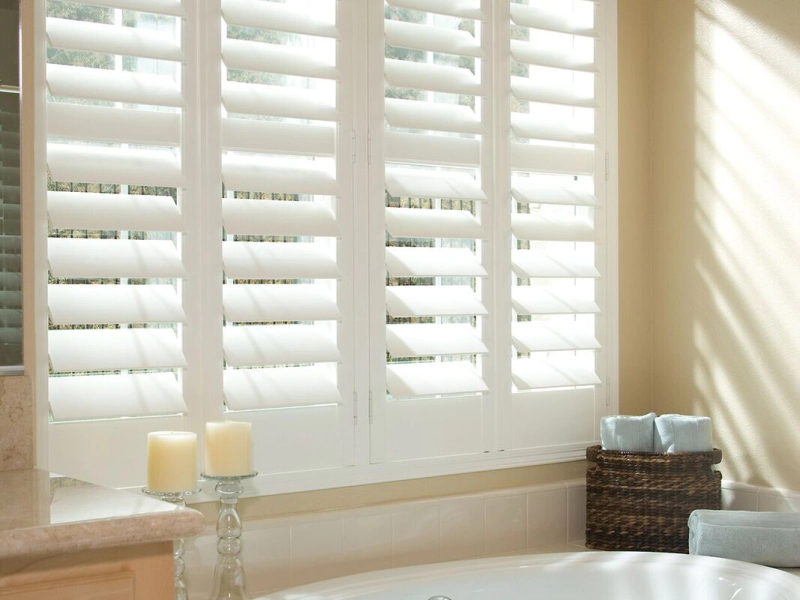
Saddleback Shutters & Blinds plans custom plantation shutters around these details. During our free in-home personalization, we evaluate the window, surrounding trim, interior materials, natural light, privacy requirements, and the way you want the shutter to look when both open and closed. The owner personally measures sill depth, frame width, and other conditions needed for the layout. Every shutter is special ordered for its individual opening.
Our family also handles plantation shutter installation without subcontracting the work. That keeps the person responsible for the measurements connected to the finished fit. For a treatment intended to remain part of the home for years, that continuity matters.
Louvers are one of the most visible parts of plantation window shutters. They also determine how you interact with daylight and privacy. The louvers are connected through a tilt system so they move together. Changing their angle allows you to redirect incoming light without necessarily opening the shutter panels. Tilt them one way to reduce direct visibility into the room. Change the angle to bring in more daylight. Open the panels when you want broader access to the glass and view.
But louver size changes more than operation. It changes proportion. A larger opening may visually support broader louvers that create longer sightlines through the shutter. A smaller or more traditional window may call for a different scale. The surrounding trim, ceiling height, interior style, and amount of glass can all influence the decision. This is why we prefer to evaluate louver proportions in the room. We can compare samples against the actual window rather than asking you to imagine how a component will look after it is multiplied across an entire shutter panel.
We also consider the view. If maintaining a stronger visual connection outdoors matters, the spacing and proportions of the louvers become part of that conversation. If privacy is the dominant concern, we can discuss how the shutter will be used throughout the day. The objective is not to select the largest or smallest louver available. It is to choose proportions that make sense for the opening.
Material changes the appearance, maintenance, and character of a shutter. Wood plantation shutters bring the natural qualities of real wood into the window. Stained finishes can reveal grain and variation, making them worth considering in rooms where flooring, cabinetry, furniture, or other wood elements are already important to the design. Painted wood creates a different effect. It can coordinate with trim and casing while retaining the construction and feel of a natural material. Composite plantation shutters provide another option.
They can be worth comparing where maintenance, room conditions, or the desired finish make composite construction more appropriate. We do not treat one material as automatically superior for every room. Instead, we look at where the shutters will be installed and what matters most to you. Appearance, upkeep, sunlight, interior materials, and budget all belong in the decision. Physical samples help.
During your in-home personalization, we can hold finishes beside the actual casing, walls, flooring, cabinetry, and furniture. Natural and artificial lighting can change the way stains and painted colors appear, so seeing the material in the room provides a better reference than selecting from an image. This is also where our no-pressure approach matters. We recommend what fits the room, not simply the highest-priced material.
Specialty windows often become architectural focal points because of their shape. Covering them with a treatment that ignores that shape can take away some of what made the opening distinctive in the first place. Custom interior shutters can provide another approach. Arches, angles, bay configurations, and other nonstandard openings can be evaluated for shutter layouts built around their actual dimensions. That does not mean every unusual window should automatically receive a shutter.
The shape, mounting conditions, sill, trim, depth, surrounding surfaces, and desired operation all need to be considered first. Bay windows require particular attention because several openings interact with one another. Panels need room to function, neighboring treatments need appropriate clearance, and the layout should look intentional across the complete bay. Angled and arched openings introduce their own measurement requirements. This is why the owner personally handles opening layouts for Saddleback Shutters & Blinds.
We want the person looking at the architecture during the consultation to remain connected to the dimensions and configuration that go into manufacturing. For windows where another treatment makes more sense, we can say so. A specialty-shaped opening should not be forced into a product simply because shutters are the service being discussed. The goal is to preserve the character of the window while gaining useful control over privacy and daylight.
A plantation shutter frame can either relate naturally to the existing window or look like a separate element competing with it. The difference often comes down to details. We look at the casing, sill, frame depth, nearby walls, decorative trim, and the overall proportions of the opening before confirming the shutter configuration. Existing trim can influence the frame style and mounting approach. In some rooms, the goal may be to make the shutter feel integrated with painted casing. In another, a stained shutter may intentionally introduce contrast and connect with wood elsewhere in the interior.
There is no single formula. The correct relationship depends on the architecture already present. This becomes particularly important in rooms with detailed millwork. Covering or visually crowding attractive trim can change the character of the opening. On simpler windows, the shutter frame itself may provide more of the architectural definition. We discuss these relationships during the consultation rather than waiting until installation to see how the components meet. The same applies to panel configuration. Panel widths, hinges, breakpoints, and the way shutters open should make sense for both the window and the surrounding space. A well-planned shutter should look intentional whether its louvers are tilted, its panels are closed, or the window is opened more fully.
Privacy and daylight are often treated as opposites. Plantation shutters provide more flexibility because the louvers can be adjusted instead of requiring the entire window to be either covered or uncovered. That can be useful in street-facing rooms, bedrooms, living spaces, and other areas where privacy changes throughout the day. The tilt mechanism moves the louvers together. By adjusting their angle, you can redirect daylight and limit sightlines while still allowing light to enter the room. When broader access to the window is wanted, the shutter panels can be opened. This gives plantation shutters for windows a different operating character from shades.
A custom roller shade uses fabric that moves across the opening. A cellular shade provides fabric coverage along with insulating honeycomb construction. Shutters remain structured within the opening and use their louvers to change the relationship between privacy and light. Which approach is better depends on the room. If you want a soft fabric treatment, shutters may not be the right direction. If you want an architectural treatment with adjustable louvers and a more permanent relationship to the opening, they become much more relevant. We make that distinction before ordering.
Window coverings can affect how a room feels near the glass, but insulation should be considered alongside the other reasons you are choosing the treatment. Plantation shutters create a fitted layer across the opening when their panels and louvers are closed. That can contribute to the separation between the room and the glass while also providing privacy and light control. If thermal performance is your dominant priority, however, custom cellular shades are worth comparing. Their honeycomb construction creates air pockets specifically at the window and approaches insulation differently from a solid shutter. This is a useful example of why we do not sell by product name alone.
You may begin the consultation interested in shutters because you like their appearance. If the primary concern turns out to be temperature control in a secondary bedroom where architectural impact matters less, another treatment could fit the priorities better. In a prominent living space, the balance may shift. The architectural character, adjustable louvers, privacy, durability, and long-term nature of plantation shutters may make them the stronger overall choice. The decision should account for the entire room rather than a single product claim.
Plantation shutters are expected to operate repeatedly for years. Construction matters. The supplied shutter options use solid louvers connected to a tilt system for coordinated movement. Mortise-and-tenon joinery provides structural connections within the shutter construction. Finishes can include stains or paints selected to coordinate with the interior. These details influence both appearance and everyday use. A shutter panel needs to remain aligned as it opens and closes. Louvers should move smoothly and hold their selected position. Hinges need to be mounted securely. The finished frame should sit properly around the opening.
During plantation shutter installation, we check these operating details rather than treating installation as complete once the shutter is attached. Tension is adjusted so panels and operating components behave correctly. We inspect alignment and movement. If an individual louver is damaged later, it can often be repaired or replaced without requiring the entire shutter panel to be removed and discarded. That repairability is useful for a treatment intended to remain in place long term. Maintenance is also straightforward. Routine cleaning generally involves wiping the shutter surfaces rather than laundering fabric or managing a more involved cleaning process.
One of the most important questions about plantation shutters is not which color to choose. It is whether you want this type of treatment to become a lasting part of the opening. Shutters are more permanent than many blinds or shades. For some homeowners, that is exactly the appeal. They want a treatment that feels integrated with the architecture, maintains a structured appearance, provides adjustable light control, and is intended to remain with the home for many years. For others, flexibility may matter more.
If you enjoy changing fabrics and colors frequently, custom window shades may give you more freedom to alter the character of the window over time. If you prefer the warmth of wood but want a less permanent treatment, custom wood blinds may be worth comparing. The correct answer depends on how you think about the room. Plantation shutters make particular sense when the window itself deserves architectural attention.
A prominent front window, a living area with detailed trim, an arched opening, or a space where you want the treatment to feel built into the room can all make shutters worth considering. Their lifetime warranty also supports the long-term nature of the product. We explain those tradeoffs during the in-home personalization so you can decide whether permanence is a benefit for your project.
Custom plantation shutters leave little room for disconnected handoffs. The product is manufactured according to measurements and layouts established before the order. If those details do not reflect the actual opening, installation cannot simply correct everything afterward. Saddleback Shutters & Blinds keeps those stages connected. The owner personally visits the property, evaluates the window, discusses the design, and handles the measurements and opening layouts. We consider sill depth, frame width, trim, mounting conditions, clearances, specialty shapes, panel configuration, and the relationship between the shutter and surrounding architecture. Once the details are confirmed, the shutters are custom ordered.
Our family returns for installation. We mount the frames and hinges, install the panels, check alignment, adjust tension, and test the louvers and panel movement before considering the work complete. We never subcontract measurements or installation. That means the responsibility does not move between unrelated crews as the project progresses. Saddleback Shutters & Blinds has worked in the window covering industry since 2001. For us, experience is most useful at the points where details matter: evaluating the opening, recognizing potential fit issues, creating the correct layout, and making the final installation look intentional.
Plantation shutters, blinds, and shades can all control privacy and daylight, but they do it in noticeably different ways.
Plantation Shutters
Shutters create a structured frame-and-panel treatment integrated closely with the window. Adjustable louvers redirect daylight and privacy, while panels can be opened for broader access to the glass.
Custom Blinds
Custom blinds installation provides adjustable slats in a treatment that remains separate from the window architecture. Wood and faux wood options can offer a similar horizontal visual rhythm with a different level of permanence.
Window Shades
Window shade installation introduces fabric and a broader range of opacity choices. Light filtering, blackout, solar, cellular, and other shade constructions solve different privacy, glare, insulation, and design needs. The decision is not simply aesthetic. Think about how permanent you want the treatment to feel. Consider whether you prefer structured louvers or fabric. Look at the shape of the opening. Decide how often you want the window fully uncovered and how much maintenance you are comfortable with. We can compare those options in your home before you commit.
Plantation shutters are custom built, so the decisions made before manufacturing deserve attention.
These decisions help turn a shutter from a product attached to the opening into a treatment designed around it.
Yes. Our custom plantation shutters are special ordered for individual openings. The owner personally measures the window and evaluates frame width, sill depth, trim, mounting conditions, and layout requirements before the order is placed.
Certain arches, angles, bays, and other specialty openings can be designed for custom interior shutters. We need to evaluate the dimensions, shape, mounting conditions, and desired operation before confirming the configuration.
That depends on the room, desired appearance, maintenance preferences, environmental conditions, finish, and budget. We bring samples into your home so you can compare the materials against your actual interior.
Individual louvers can often be repaired or replaced when damage occurs without requiring replacement of the entire shutter panel. The appropriate repair depends on the specific product and damage.
Plantation shutters include a lifetime warranty. Saddleback Shutters & Blinds also provides local support so you have someone familiar with the installation to contact if warranty service is needed.
Let us evaluate your windows, trim, and light in person. We’ll bring shutter samples and help you compare materials, louvers, and layouts.