Get Your Free In-Home Personalization
- Home
- Middleton, ID
Middleton, ID
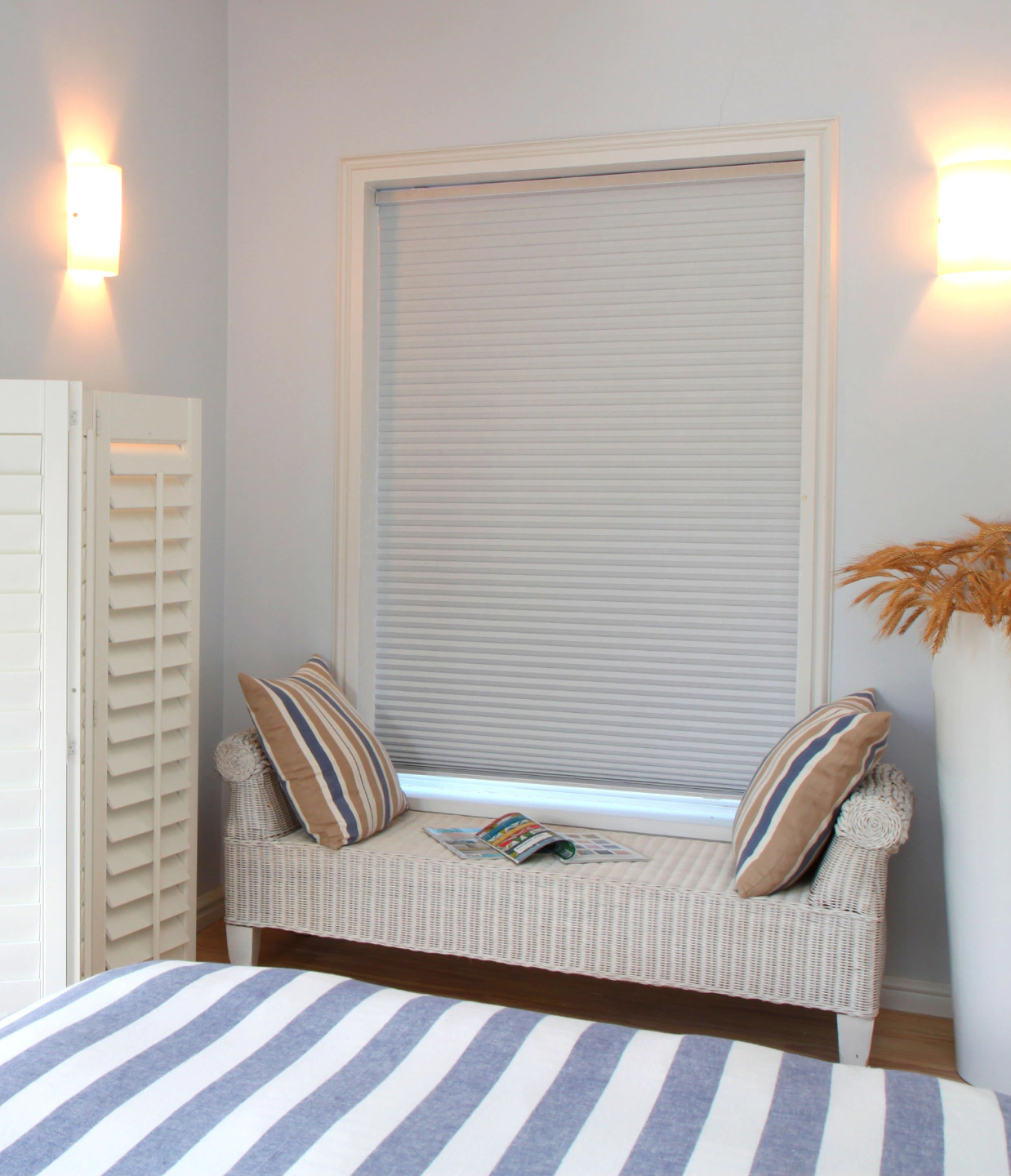
It is easy to begin a window treatment project by looking at colors, materials, and photographs. For a custom home, starting with the opening itself can lead to a better decision.
Window width and height are only part of the picture. Trim depth, available mounting surfaces, clearance, handles, surrounding casing, sill conditions, and the way neighboring windows relate to each other can influence which treatment makes sense.
Large or distinctive windows deserve additional consideration. A plantation shutter becomes part of the architecture, so its frame and louver proportions need to work with the opening. A wide blind requires appropriate support and hardware. A cellular shade needs enough room for its mounting system and operation. An exterior shade has to account for the structure where it will be installed.
This is why Saddleback Shutters & Blinds keeps measuring owner-led.
We look at the window before the product is ordered and connect the technical details with the choices you are making about light, privacy, insulation, appearance, and operation.
That process also gives us the freedom to say when another treatment would make more sense. If shutters are not right for a particular room, we can compare blinds or custom shades instead.
The window comes first. The recommendation follows.
A home with distinctive architecture does not need identical treatments on every window to feel cohesive.
In fact, forcing one product throughout the property can create compromises.
A main living area may have large windows where preserving daylight is important. Bedrooms may need more privacy and room darkening. A bathroom can make moisture resistance a priority. A sun-exposed patio may benefit from controlling heat before it reaches the outdoor living area. Another room may have a window where insulation at the glass matters more than the view.
Custom window treatments allow us to address those needs individually.
The design can still feel connected. Wood tones, painted finishes, fabric colors, textures, and hardware can be coordinated across different product categories. Plantation shutters might define a prominent living area while cellular shades provide softer coverage in bedrooms. Faux wood blinds can serve moisture-prone spaces without introducing an unrelated appearance.
This is one reason our free in-home personalization takes place at your property.
Physical samples can be viewed against the home’s flooring, trim, cabinetry, walls, furnishings, and natural light. Instead of trying to remember how those finishes look while selecting from somewhere else, you can compare them side by side.
The goal is consistency where it helps and flexibility where the room needs it.
Middleton homeowners may be working with custom single-family homes, rural properties, remodels, or rooms with very different window conditions. Rather than repeating every product available, these are some of the treatments most relevant to that type of project:
These products solve different problems. A homeowner concerned about insulation may compare cellular shades with plantation shutters. Someone covering a bathroom may look at faux wood rather than natural wood. A large west-facing patio can lead to an exterior solution rather than another interior treatment.
We help you make those distinctions before an order is placed.
A small discrepancy in measurement can become a very visible issue after a custom product arrives.
An inside-mounted shade can reveal an unexpected light gap. A shutter frame can look uneven against surrounding trim. A blind can sit awkwardly if the mounting depth was not considered. Hardware can interfere with a handle or other part of the opening.
These problems are easier to prevent before manufacturing than to correct afterward.
The owner personally handles measurements for Saddleback Shutters & Blinds. Depending on the selected treatment, we evaluate width, height, depth, mounting surfaces, clearance, frame conditions, trim, and the hardware required for operation.
Plantation shutters may involve additional layout decisions, including louver size, frame style, panel configuration, and breakpoints. Exterior roller shades introduce structural considerations around brackets, housings, side channels, and the area where the shade will travel.
We never subcontract this stage.
The same family responsible for understanding what you want from the windows remains involved when measurements are taken and when installation happens.
Once the details are confirmed, every product is custom ordered specifically for the opening. That connection between selection, measuring, ordering, and installation is one of the most important differences between a truly custom process and simply purchasing a treatment in an approximate size.
Wood blinds can bring natural warmth to a room, but real wood is not automatically the right material for every window.
Living rooms, dining areas, offices, and bedrooms may be good places to consider real wood when its grain, finish, and lighter weight complement the interior. Physical finish samples can also help coordinate the blinds with cabinetry, floors, trim, and furniture.
Faux wood has different strengths.
Its construction makes it useful in rooms where moisture resistance and straightforward cleaning are higher priorities. Bathrooms, kitchens, laundry areas, and other spaces exposed to changing conditions may be better candidates for faux wood blinds.
Both options provide adjustable slats for controlling light and privacy, but the environment surrounding the treatment should help determine the material.
Sun exposure matters, too.
For a window receiving intense sunlight, we can discuss how different materials and finishes are expected to perform and whether another treatment category should be considered. A cellular shade may be more useful if insulation is the main concern. A solar roller shade may make more sense if glare is the dominant problem.
We do not approach these decisions as a contest between products.
The purpose of having multiple custom window coverings available is to match the material and construction to the room rather than forcing the homeowner to make every room work with one choice.
Large windows can make a room feel open, but they can also create noticeable temperature differences near the glass.
Cellular and honeycomb shades are worth considering when insulation is one of the main reasons for adding a window covering. Their construction forms air pockets within the treatment, creating an additional thermal layer at the window.
This can be useful for Middleton properties where homeowners want to consider both sunlight and changing seasonal temperatures.
Cellular shades can also perform more than one job.
Light-filtering fabrics allow softened daylight into the room. More opaque fabrics provide increased room darkening and privacy. Cordless configurations can simplify operation, particularly for households that prefer to eliminate dangling cords. Compatible motorized options may be useful for tall, difficult-to-reach, or frequently adjusted windows.
Plantation shutters offer another way to add a substantial layer at the opening while providing adjustable louvers for daylight and privacy.
Which option fits depends on the room.
A homeowner may prefer the architectural appearance of shutters in a front living area and the softer appearance of cellular shades in bedrooms. The important part is recognizing that insulation, light control, privacy, maintenance, and appearance can be considered together.
During the in-home personalization, we can compare those products at the windows and help you determine which tradeoffs are worthwhile for your property.
Some solar-control problems are better addressed outside.
A covered patio or outdoor living area can become uncomfortable when direct sunlight enters from the side, even when there is a roof overhead. Interior window treatments cannot solve the comfort of an outdoor seating area before sunlight reaches the home’s glass.
Exterior roller shades provide another option.
Installed around patios, pergolas, and other compatible structures, these treatments can intercept sunlight before it reaches the protected area. Solar screen fabrics are available in different weave densities, allowing the balance between shade, airflow, visibility, and solar control to be considered.
Exterior products also have different installation requirements from interior shades.
The structure needs to support the selected brackets and housing. Depending on the system, side channels may help guide the material. Retractable designs allow the shade to return to its housing when it is not needed, and compatible motorized controls can simplify operation.
This is not a product we recommend merely because a property has a patio.
We first look at the direction of exposure, the area you are trying to protect, the structure available for mounting, and how you use the outdoor space.
For a property where afternoon sun regularly reduces the usefulness of a patio or sun-exposed area, controlling that sunlight before it reaches the space may be worth comparing with interior-only approaches.
Custom homes often contain materials that deserve to be considered during window treatment selection.
Wood flooring may have a particular undertone. Trim can be warm or cool. Cabinetry, stone, wall colors, furniture, and existing architectural details can influence whether a treatment looks integrated or disconnected.
A small sample viewed under different lighting does not always tell the full story.
That is why we bring the selection process into your home.
During your free in-home personalization, we can hold wood finishes next to cabinetry, compare shutter colors with existing trim, look at shade fabrics under natural light, and consider how woven textures relate to other materials in the room.
We can also walk from room to room.
That matters when you want several types of custom window coverings without creating an inconsistent result. A plantation shutter in one room can relate visually to wood blinds elsewhere. Cellular shades can use colors that coordinate with painted trim. Exterior products can be considered in relation to the structure where they will be mounted.
The conversation also includes practical considerations.
How much privacy does the room need? When does direct sunlight enter? Does the window affect room temperature? How much maintenance do you want? How often will the treatment be operated? What budget makes sense for the project?
Those questions give the samples context.
A custom order should begin with more than a product name. Before deciding, look closely at how the window and room function.
You do not need to resolve these questions by yourself. They are useful observations to bring into the consultation.
Tell us which windows are causing problems and what you want to change. We can use those priorities to narrow the product choices before discussing the final details.
Not every opening is unusual, but custom ordering allows the treatment to be manufactured around the measured window rather than selected from a limited set of standard dimensions. This can be particularly useful when openings, trim, depth, or mounting conditions vary throughout a property.
Cellular shades use honeycomb-shaped air pockets that create an additional insulating layer at the glass. They are worth comparing when insulation is a priority, especially because fabric opacity and operating style can also be selected according to the room.
Not necessarily. Real wood may suit living spaces where natural material and finish are priorities, while faux wood can make more sense in moisture-prone areas. Other rooms may benefit more from shutters or custom shades.
Exterior roller shades can reduce direct solar exposure around compatible patios, pergolas, and outdoor areas. The appropriate system depends on the structure, direction of exposure, mounting conditions, desired visibility, and how the space is used.
The owner personally handles measurements and opening layouts. Saddleback Shutters & Blinds does not subcontract measurements or installation, so responsibility remains connected throughout the project.
Mon – Fri: 8:00 AM – 7:00 PM
Sat – Sun: Closed
Tell us about your Middleton, ID windows, room needs, or difficult openings. We’ll bring samples to your property and help you compare made-to-fit options.