Get Your Free In-Home Personalization
- Home
- Garden City, ID
Garden City, ID

Glare control is not simply about making a room darker.
Imagine a front desk where afternoon sunlight reflects directly across a computer screen. Lowering an opaque shade may solve the immediate problem, but it can also remove the view through the window and make the space feel closed. A customer-facing property may have an additional reason to preserve visibility around entrances or exterior-facing glass.
Solar roller shades can provide a more nuanced solution.
Solar fabrics filter sunlight and are available with different openness levels. That allows the treatment to reduce glare and UV exposure while retaining different degrees of visibility through the window. The appropriate material depends on the direction of the glass, intensity of sunlight, desired privacy, interior use, and how much of the view you want to keep.
This is particularly relevant to commercial window treatments. An office, storefront, reception area, and meeting room can all have large windows while requiring very different levels of light control.
We evaluate the conditions at the property instead of choosing fabric from a catalog alone. During an on-site personalization, we can look at where sunlight lands, which screens or work areas are affected, and how people move through the space.
The objective is to control the problem without unnecessarily giving up the advantages of the glass.
Glare and privacy are related, but they are not the same problem.
A solar shade may reduce bright sunlight during business hours while allowing some visibility through the material. That can be exactly what a commercial workspace or living area needs during the day. After dark, however, the privacy characteristics can change as interior and exterior lighting conditions reverse.
A bedroom has different requirements. So does a bathroom. A conference room may need more visual separation than a public-facing reception area.
Understanding that difference before ordering custom window coverings can prevent disappointment later.
We begin by asking when privacy matters. Is it primarily a daytime concern? Is nighttime coverage more important? Does a workspace need to reduce distraction without feeling enclosed? Do customers or staff need to maintain visibility toward an entrance?
Once those questions are clear, we can compare solar fabrics, roller shades, blinds, cellular shades, shutters, and other treatments according to their actual function.
In some situations, one treatment can provide the desired balance. In others, the room may benefit from a different material or a layered approach.
We would rather explain those tradeoffs than describe one product as the answer to every window. Not every treatment belongs in every room, and commercial properties make that especially clear.
Garden City properties can present a mix of residential windows, commercial glass, wide openings, workstations, and rooms exposed to changing sunlight. Rather than running through every product Saddleback offers, these are some of the options most relevant to that mix:
The strongest choice depends on what is happening at the window. A solar shade may make sense at a workstation while a cellular shade works better in a bedroom. A commercial entry can require a different balance from a private office.
The products do not need to be identical to create a coordinated property.
The larger the window treatment becomes, the more important everyday operation can be.
A treatment may look appropriate when fully lowered, but if it is inconvenient to adjust, people may stop using it as intended. This can be especially noticeable in commercial environments where shades are raised and lowered regularly or where furniture and workstations make manual controls difficult to access.
Wide windows also place different demands on hardware and mounting.
Headrails, brackets, tracks, fabric weight, mounting surfaces, and the dimensions of the opening all need to be considered before the treatment is ordered. Commercial installations may require more substantial components according to the selected system and size of the glass.
Motorization can be useful in some of these situations.
Depending on product compatibility, motorized shades may use a remote, wall control, smartphone application, or other supported control system. Multiple treatments may also be easier to operate when their controls are planned together.
But motorization is not automatically necessary just because a window is large.
We look at how frequently the covering will move, who will operate it, where controls can be accessed, and what the property actually needs. A manually operated shade may still be the right choice in one location, while automation provides meaningful convenience somewhere else.
The operating system should make the window easier to use, not add complexity for its own sake.
Selecting commercial window treatments from photographs alone can leave important questions unanswered.
How strong is the glare at the workstation?
At what time does it become disruptive?
Does the front desk need a clear view toward an entrance?
Which windows receive direct exposure?
Will customers see the back of the treatment?
How frequently will employees need to adjust it?
These are site questions, so we prefer to answer them on site.
Our personalization process allows us to bring samples to the property and evaluate the conditions where the treatment will actually operate. We can compare solar fabrics against the glass, look at how different openness levels affect visibility, and discuss whether manual or motorized operation makes sense.
For commercial projects, material requirements can also differ according to the property and application. Where applicable, flame-rated material options can be considered in relation to local fire and building requirements.
This approach helps keep the selection grounded in the workspace rather than in a generic product recommendation.
The same philosophy applies to residential customers. We bring samples into the home so colors, textures, fabrics, and finishes can be viewed against the actual trim, flooring, furnishings, and natural light.
Whether we are standing at a front desk or in a living room, the decision should happen where the window problem exists.
Some windows create a problem even when direct glare is not severe.
A large area of glass can influence how a room feels as outdoor temperatures change. If improving insulation at the window is an important part of the project, cellular shades are worth comparing with roller products and blinds.
Cellular shades use a honeycomb construction that creates air pockets within the treatment. Those pockets provide an additional insulating layer between the room and the glass.
The fabric can address light at the same time.
Light-filtering cellular shades soften incoming daylight, while more opaque configurations can provide greater room darkening and privacy. Depending on the selected system, cordless or motorized controls may also be available.
For a residential property, cellular shades can make sense in bedrooms, living areas, or other rooms where both insulation and light control matter. A commercial space may have different priorities and favor solar roller shades where glare and visibility are more important.
This comparison illustrates why we do not choose window coverings based on a single feature.
A cellular shade may provide stronger insulation characteristics, while a solar fabric may preserve more outward visibility. Blinds offer adjustable slats. Plantation shutters provide another type of adjustable light control with a more architectural appearance.
During the consultation, we help you decide which of those benefits actually matters most at each opening.
A custom treatment needs room to function.
Accurate width and height are essential, but they are not the only measurements that matter. Mounting depth, available surfaces, clearance, nearby trim, handles, hardware requirements, and the size of the treatment can all influence the installation.
Large glass makes these details especially important.
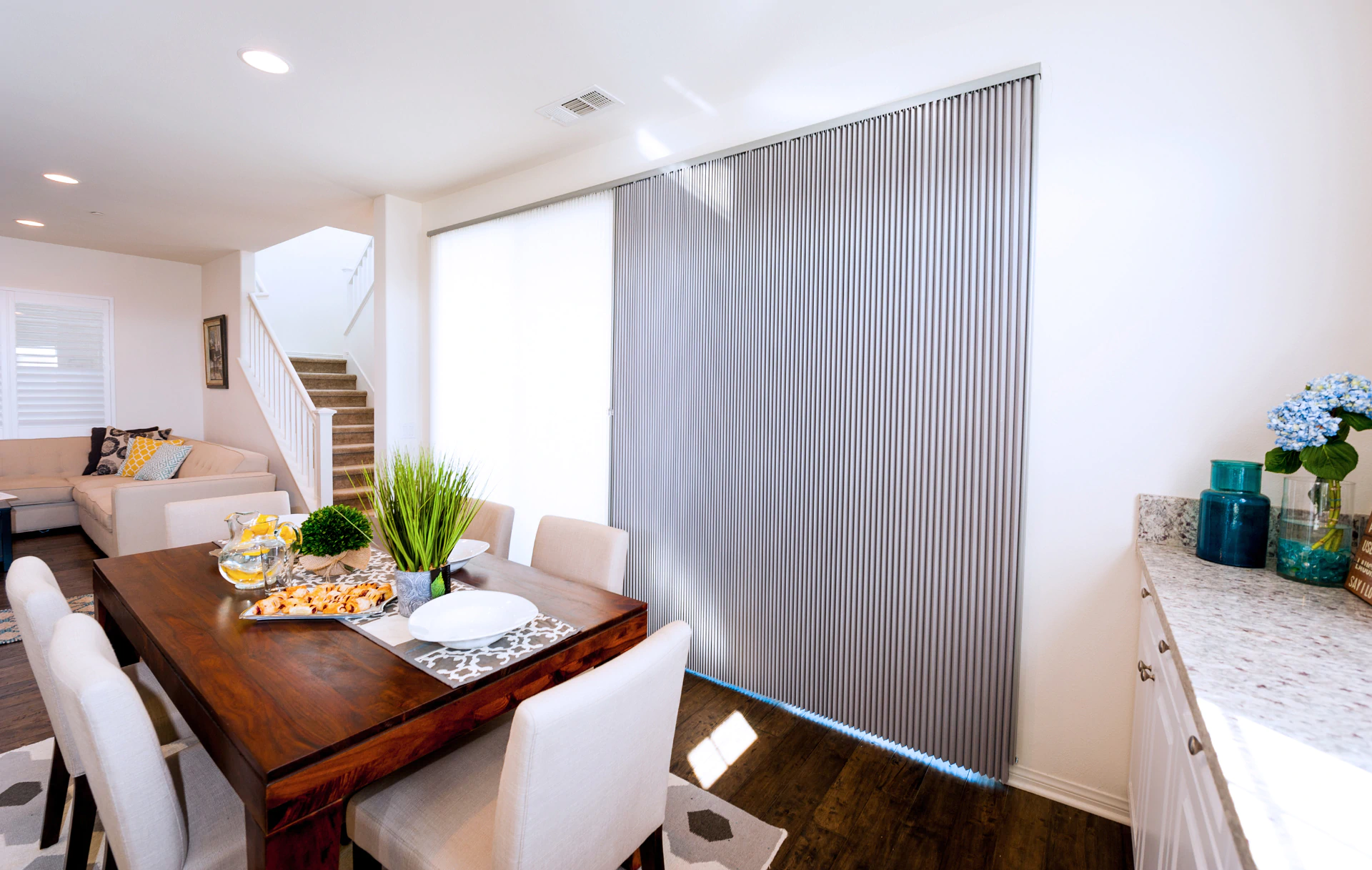
A wide roller shade may require different hardware considerations from a smaller residential shade. A motorized treatment introduces components that need to be planned as part of the installation. Vertical blinds across a sliding opening require appropriate track placement and clearance for movement.
Saddleback Shutters & Blinds keeps the measuring process direct.
The owner personally evaluates and measures the openings before products are ordered. That allows questions about the window, hardware, product, and installation to be considered together instead of treating measurement as a separate handoff.
Every product is then custom ordered specifically for the opening.
Our family also handles installation. We do not subcontract the final stage after taking the time to understand the property ourselves. Treatments are mounted, aligned, tested, and adjusted according to the selected system.
For customers comparing a window treatment company, this continuity is important. The decisions made during the first site visit remain connected to the person responsible for getting the treatment onto the window correctly.
When a window feels uncomfortable, it is easy to say the room gets too much sun. Getting more specific leads to better product choices.
Before choosing a treatment, consider these four questions:
Once the main problem is clear, color and design become easier to address. Instead of sorting through every available product, we can narrow the discussion to treatments capable of doing the job.
That is also how we avoid recommending the most expensive option simply because it has more features. The right treatment is the one that solves the relevant problem and fits the property.
Solar fabrics are designed to filter sunlight and can retain varying degrees of outward visibility depending on their openness and other characteristics. We can compare samples at the affected glass so you can see the balance before choosing.
Commercial projects can introduce different requirements involving wide glass, frequent operation, workstations, outward visibility, hardware, and applicable material requirements. Product selection should reflect how the property is actually used.
Motorization may be available for compatible treatments and can be useful on tall, wide, difficult-to-reach, or frequently adjusted windows. We evaluate the opening and selected product before recommending a control system.
Solar materials should not automatically be selected for nighttime privacy. Their visibility characteristics change with lighting conditions. If privacy after dark matters, tell us during the consultation so we can compare appropriate options.
The owner personally handles measurements and opening layouts, and Saddleback does not subcontract installation. Keeping these stages connected helps carry the original plan through ordering and final installation.
Mon – Fri: 8:00 AM – 7:00 PM
Sat – Sun: Closed
Tell us about glare, privacy, visibility, or difficult glass at your Garden City, ID property. We’ll help you compare options based on how the space is used.